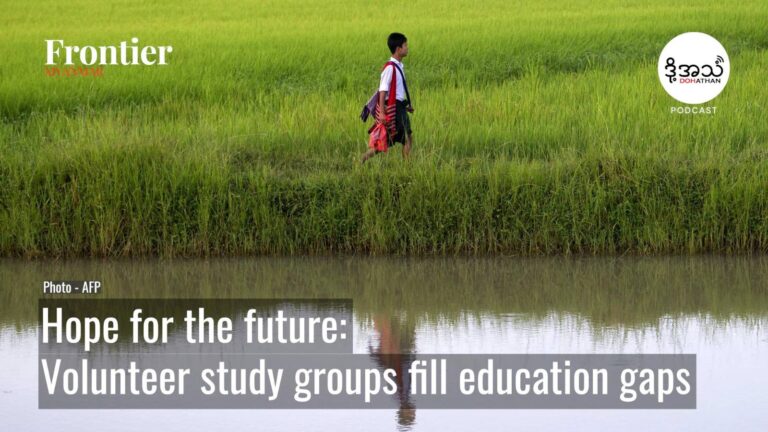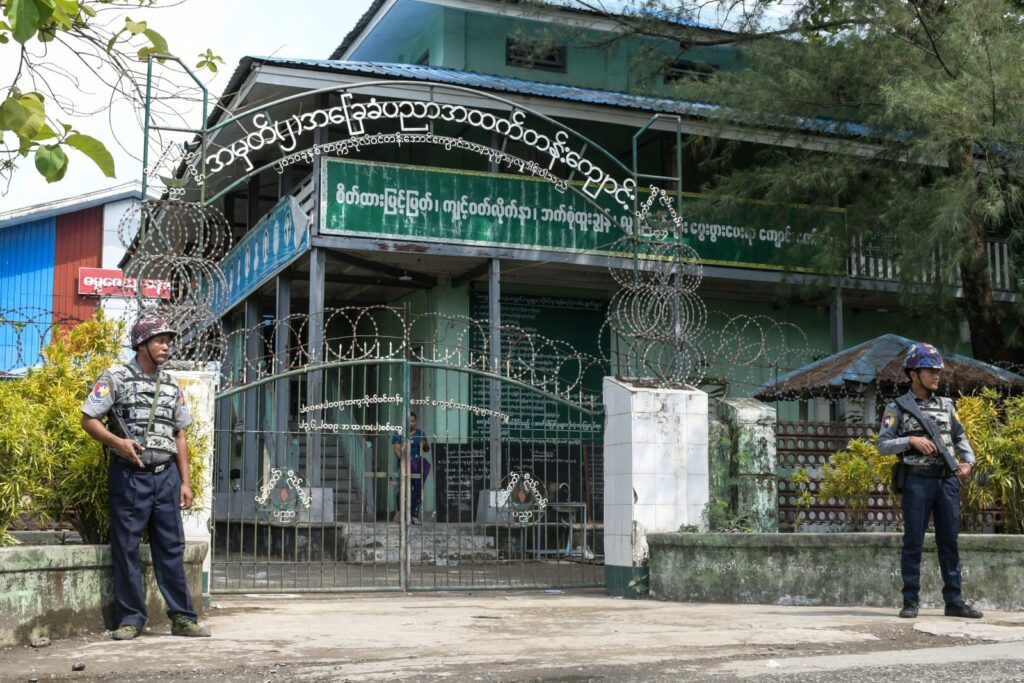
Stymied by airstrikes, travel bans and school closures, students and teachers in Myanmar’s westernmost state are uncertain of what the future holds for education under Arakan Army control.
By THET NAING | FRONTIER
Since Ko Lu Lu was five years old, he’s always secured first place in his class and dreamt of becoming an engineer.
In August 2024, when fighting broke out in his village, Lu Lu’s school closed its doors and his family was forced to flee their home. Now a tall and athletic grade seven student, he wonders if he’ll be able to return to the classroom at all.
“I’m anxious. I’m easily startled and afraid that planes will come and drop bombs,” the 15-year-old told Frontier in Kalabar village, in Rakhine State’s Kyaukphyu Township. “Sometimes we had to run from school and hide.”
With thick eyebrows, a broad nose and a perpetual smile, he maintains an optimism that stands in stark contrast with his circumstances. His family now lives in a camp for internally displaced people after clashes between the Arakan Army and the Myanmar military turned his township, and his school, into a battlefield.
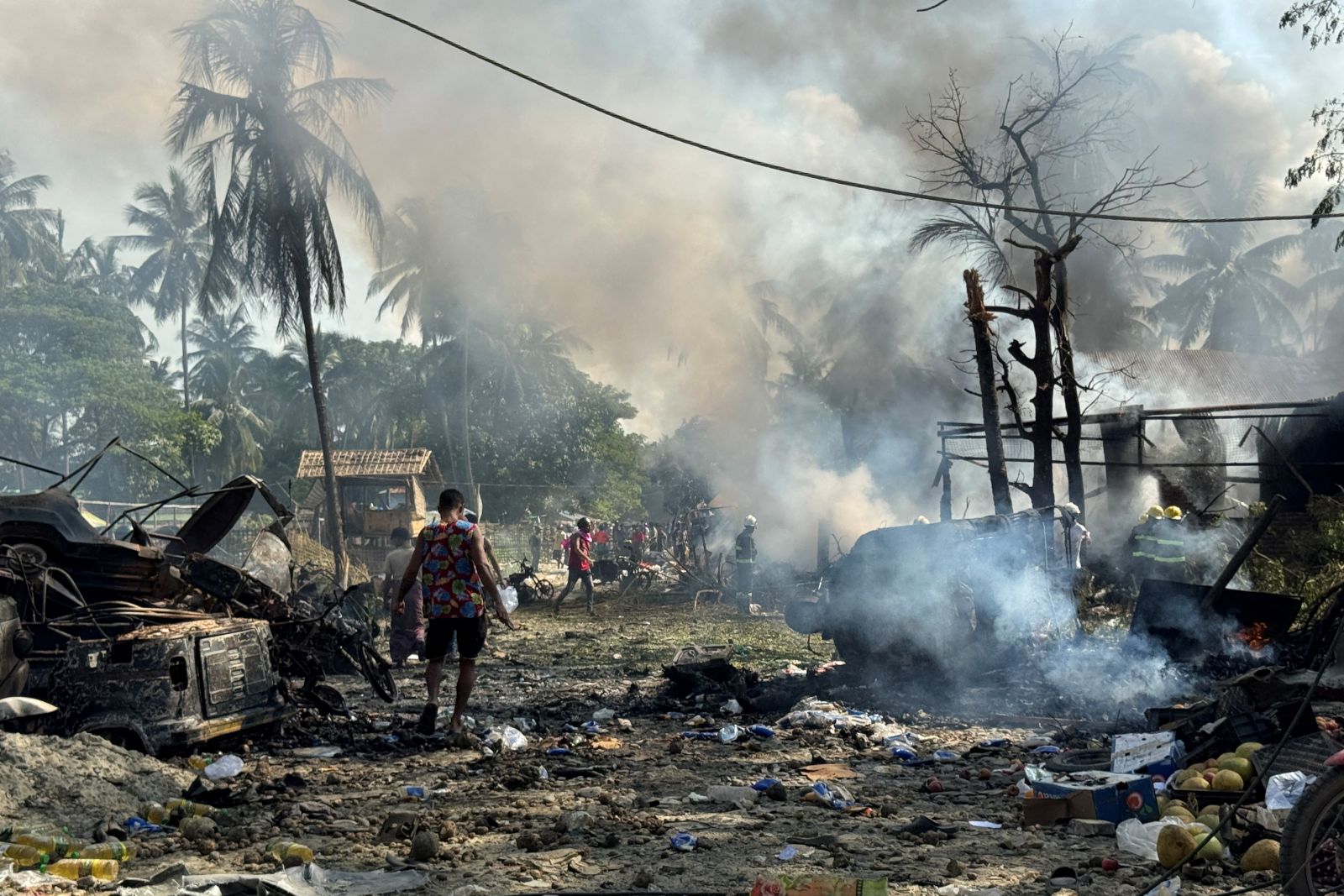
Opportunities for education are scarce these days. He started attending a school established by the AA in September last year, but less than a month later, the junta bombed a wedding ceremony only 100 metres from his classroom.
The blast killed Lu Lu’s former teacher, who was attending the celebration, and four others.
“I went to the funeral. Some female students were crying. I felt like crying too, but I didn’t,” Lu Lu said. He hasn’t been able to attend classes since the bombing. The AA closed the school shortly after, citing security concerns.
Now his family wants to send him to study in Yangon, but they fear that junta soldiers will arrest him as part of their conscription drive. In the meantime, Lu Lu worries he’s falling behind in his education.
“Being unable to attend school or study at this age makes me feel like I’m losing so much,” he said. “I feel like so many opportunities are being lost.”
Schools under fire
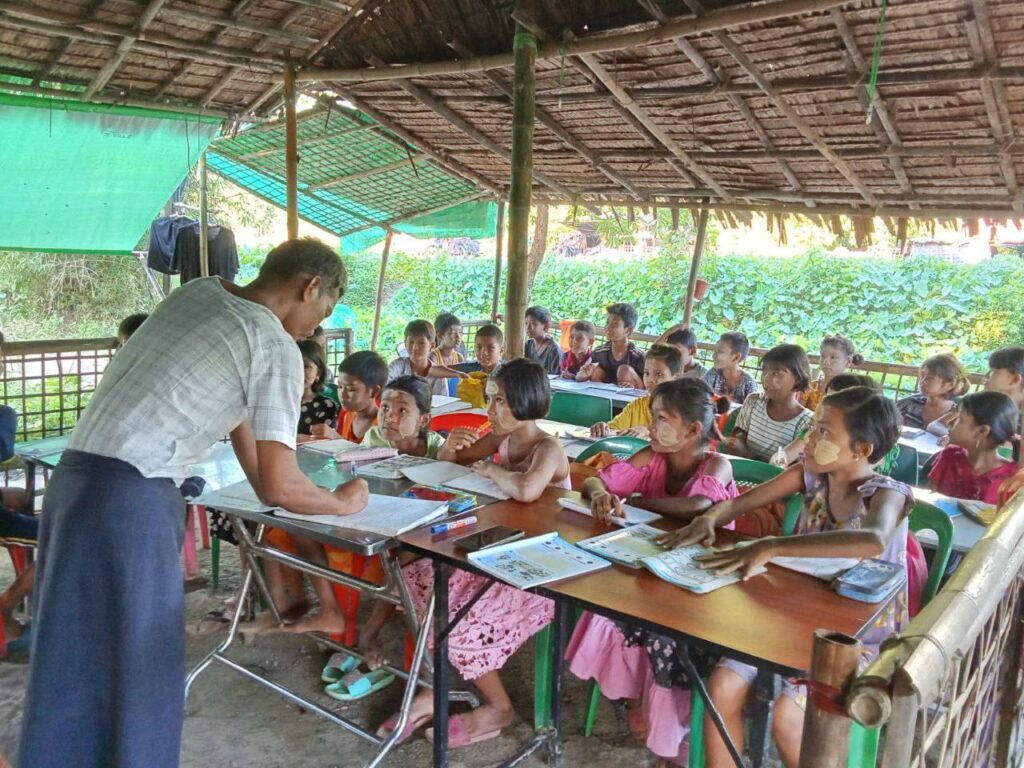
Lu Lu is just one of millions of students who have been forced out of their classrooms across Myanmar by fighting between the military and resistance forces, and by regime airstrikes. In Rakhine, where the AA controls 14 out of 17 townships, battles and bombings have permanently closed many schools, while fees and travel bans have barred others from enrolment.
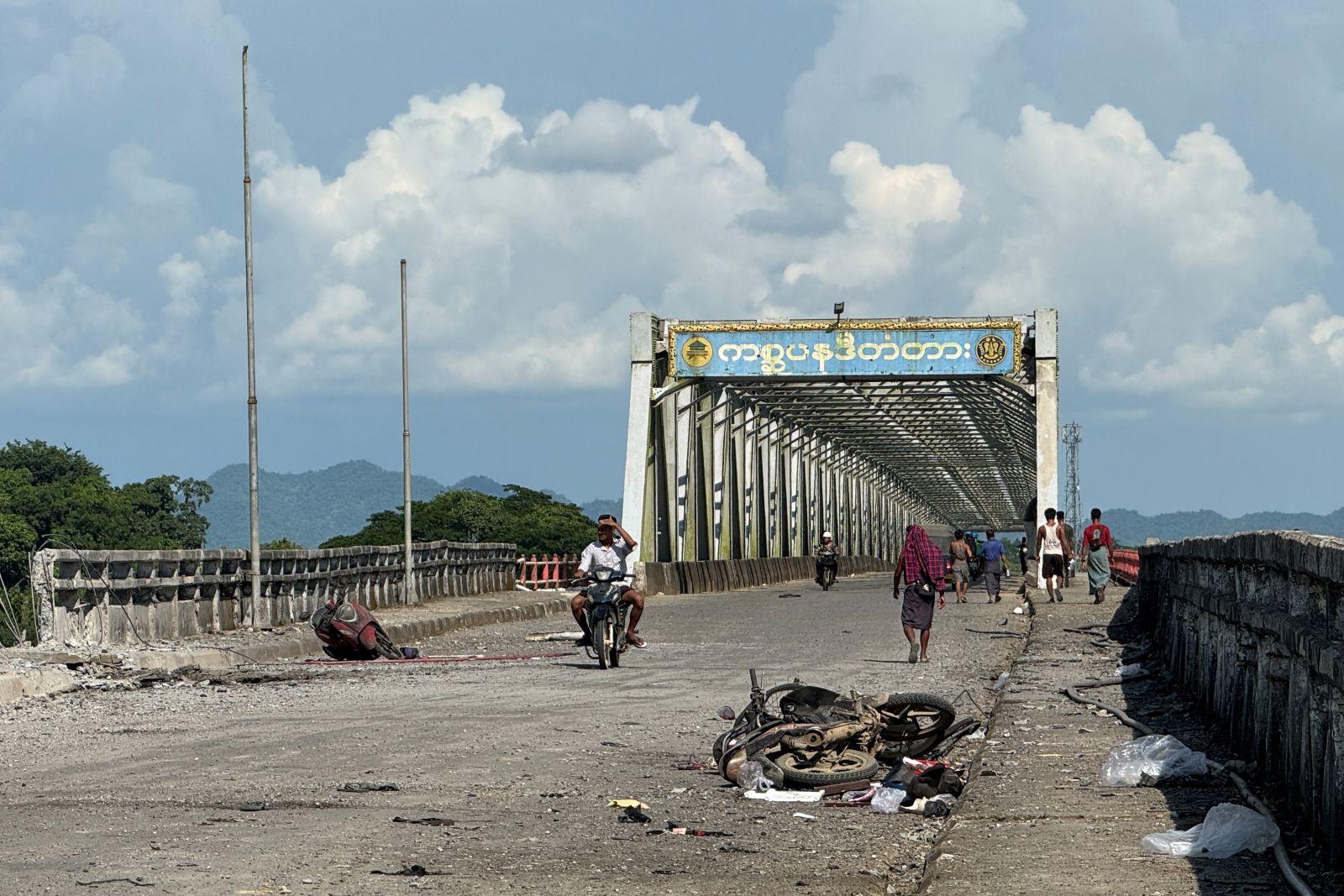
In ever-desperate bids for control, the junta has launched numerous attacks to weaken the AA. Thousands of civilians in Rakhine have become victims of airstrikes on markets, hospitals and celebrations, as well as village burnings and indiscriminate shelling.
Military operations have particularly impacted school-age children, said one teacher in her 50s in northern Rakhine’s Myebon Township. She quit her job at a government school after the coup in February 2021 and now teaches at a school run by the AA. However, she said airstrikes are frequent.
“I don’t want children to be put at risk while they’re studying,” she told Frontier on condition of anonymity. “All children want to learn. But their fear is greater.”
The regime routinely targets schools as part of its offensives in areas under resistance control across the country. On September 12, an airstrike on a private high school in Rakhine’s Kyauktaw Township killed at least 18 students.
Aerial attacks in Rakhine killed over 370 people in the first eight months of 2025, according to the National Unity Government – a parallel civilian administration formed by lawmakers deposed in the coup. Almost 100 of the victims were under the age of 18.
The coup exacerbated already difficult circumstances students faced in accessing education in Myanmar. The United Nations International Children’s Emergency Fund said over 4.7 million children missed out on their education last year.
Fighting between the regime and the AA resumed on November 13, 2023, after more than two years of an informal, fragile ceasefire. According to the junta’s Ministry of Education, less than half of the 573,000 students enrolled for the 2023-2024 academic year in Rakhine were able to attend school because of the war.
In early 2024, both the junta and AA enacted military conscription, primarily targeting men between the ages of 18 and 35. While the junta has forcibly conscripted young people nationwide, the AA prevents those eligible to serve in its army from leaving Rakhine.
Faced with few options, some young people have fled overseas to find work, while others have joined the AA voluntarily.
Ko Maung Aye Min Tun was one such student. His school in Kyaukphyu’s Kalabar village closed in August 2024 as he was completing grade 11, the final year before students take university entrance exams.
Now 18 years old, he’s traded in his school uniform for police garb to work with the AA.
“I joined with the idea of helping my region and my country in one way or another instead of doing nothing in the village,” said Maung Aye Min Tun.
Last year, the military held university entrance exams in only three townships in Rakhine – 1,564 students registered and only 550 passed, according to the junta’s Ministry of Education.
Maung Aye Min Tun said he misses his life as a student. He had more freedom of choice then.
“Now I have to wake up regularly at dawn. With planes coming to shoot and heavy weapons firing, my time is spent in bomb shelters,” he said. “I can no longer live lightheartedly because of my duties.”
Fees out of reach
Chronic poverty and food insecurity in Rakhine are also forcing parents to make difficult decisions for their children.
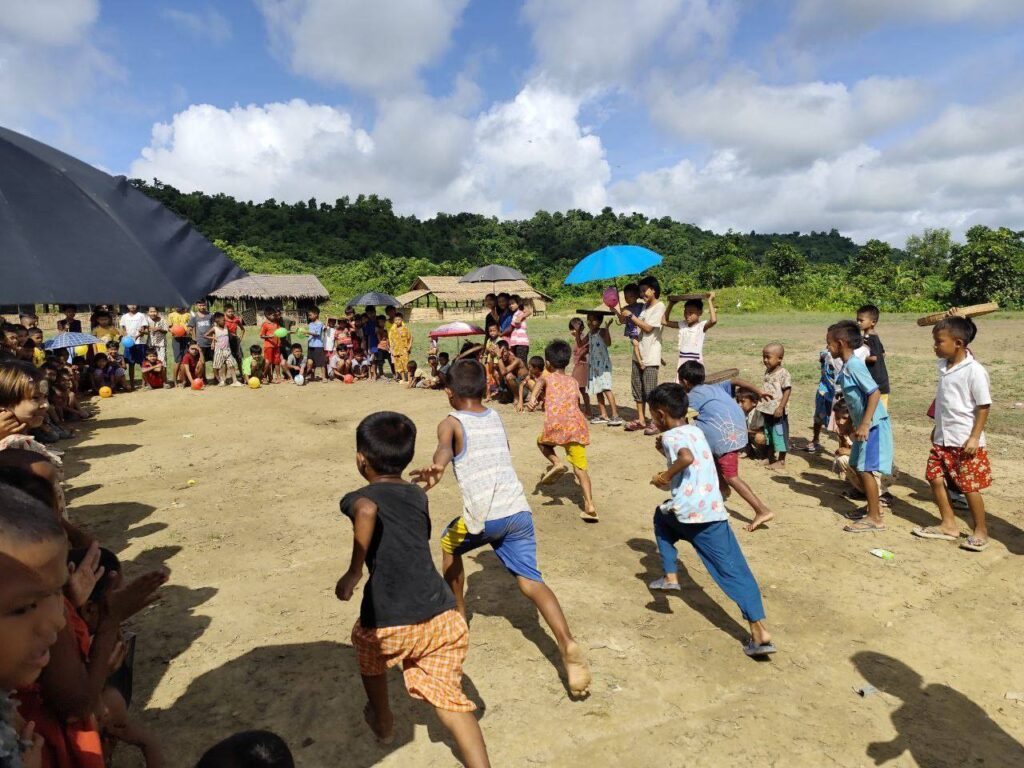
The AA has opened schools across the townships under its control since 2014. However, with fees as high as K60,000 (about US$15 at the market rate) a month, depending on the township and grade level of the student, many parents can’t afford to enroll their children.
One parent living in a camp for internally displaced people in Ramree Township said she can barely afford to survive, let alone pay school fees.
“I’m a mother and I want to provide schooling to my children. But between schools being bombed and not having the money for fees, children end up not attending,” she said, asking to remain anonymous for fear of reprisals. “Most people here can’t afford to attend school.”
Some parents, finding no opportunities in Rakhine, have fled to Malaysia and Thailand in search of work. But the move does not always turn out as planned. When brokers promise jobs that never materialise or pay less than expected, jobseekers can find themselves experiencing new hardships with fewer resources.
With little to do in Kulaba village, Ma Khin Thida went abroad to find work, leaving her two children in Yangon with a relative. Now in Malaysia, she hopes to re-enroll them in school next year. She is the family’s sole provider after her husband passed away eight years ago. She paid 5,500 ringgit (about $1,373) for a broker to smuggle her to Malaysia. She arrived in November but still hasn’t been able to find a job.
“My child doesn’t want to work. He still wants to attend school,” she said of her 13-year-old son in grade four, who in normal times would be in grade 8 by now. “Seeing his friends attending school in Yangon makes him cry.” She also has a 17-year-old daughter in grade 10.
“I’ve made up my mind to put them in school next year, whether it’s convenient or not,” Khin Thida said. “I’m worried my children won’t be educated. They will be poor and have to do exhausting work if they aren’t educated.”
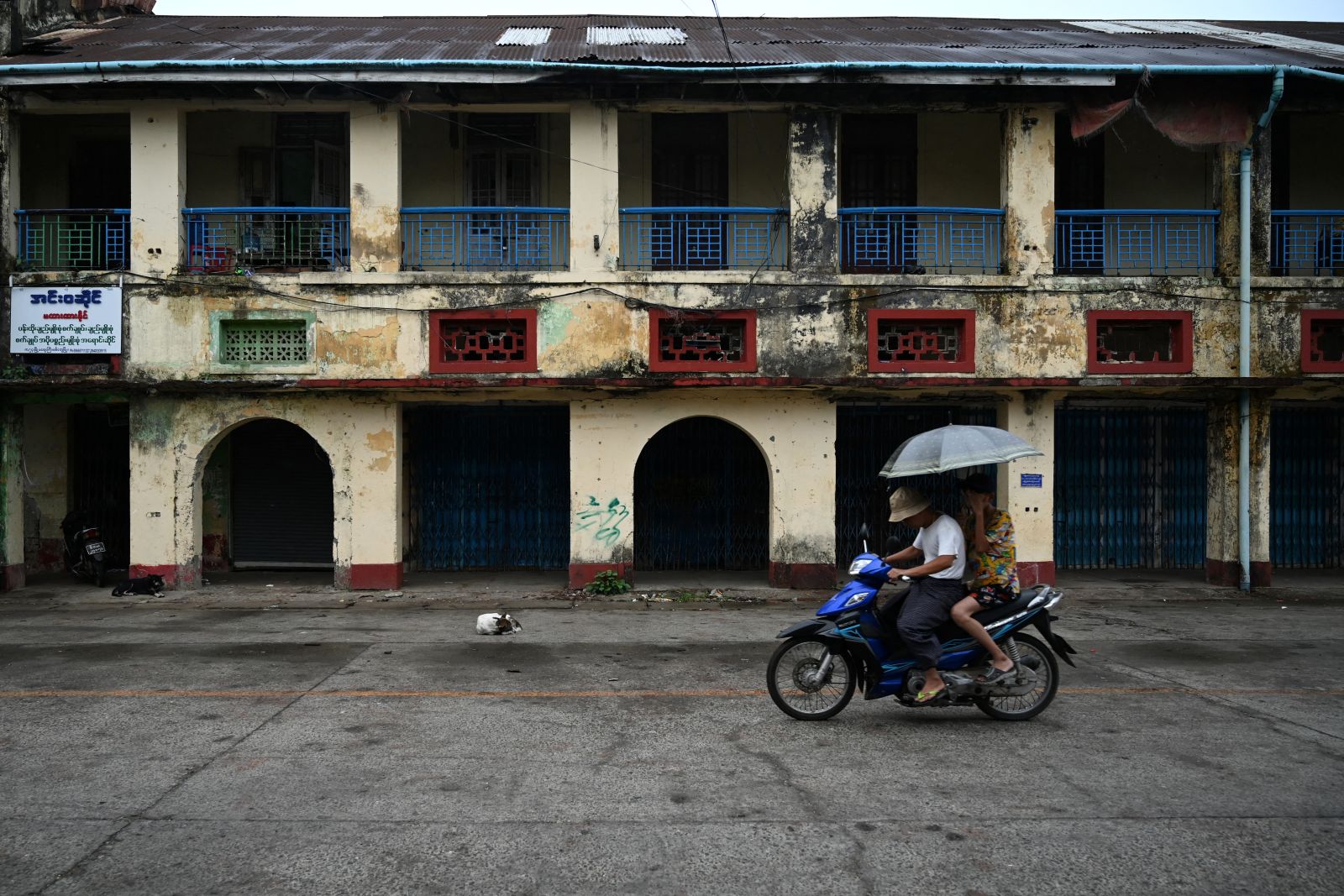
The junta strictly monitors movement in and out of Rakhine in an attempt to crack down on the AA and limit access to humanitarian aid. Such bans mean parents must spend large sums of money to send their children outside of the state for a chance at uninterrupted education.
A grade nine student, speaking with Frontier on condition of anonymity, said her parents spent K2 million in broker fees and bribes to send her from Kyaukphyu to Yangon.
“I feel bad that some of my friends can no longer study while I’m able to attend school,” she said.
The AA’s education system
Under the AA, the Arakan People’s Revolutionary Government is tasked with introducing services like education, a health system, a judiciary and administrative offices.
At a press conference in March last year, the AA stated it was “drafting short-term and long-term education policies and quality curricula to implement a modern education system”. Nearly a year later, the organisation has yet to release any official plans.
The AA’s Department of Education began re-opening schools in September 2024, but some educators in the state believe that both a slow-moving bureaucracy and the protracted war are leaving children behind.
One woman in her 20s, working for a civil society organisation in Rakhine, believed the AA needed to prioritise education and collaborate with experts from outside the state.
“I think it would be a better system if they bring in education staff from the previous government and cooperate with them,” she told Frontier on condition of anonymity. “The education system will improve if they create paths to apply for scholarships to attend university.”
Another woman working for a women’s rights organisation in Rakhine said some civil society groups offer computer courses, English classes and development training, but they’re often just tick-box exercises with no long-term strategy.
“Only one or two organisations are teaching like that – it’s not effective teaching,” she said. “They’re working with the aim of completing a project. They’re not doing it with the aim of students becoming literate or educated.”
She worries that the lack of quality learning for children in Rakhine will significantly affect sectors like health and education in the future.
“The number of educated people will decrease and critical thinking will weaken if the youth continue like this without studying,” she said. “They won’t be able to fit into society and their self-confidence will drop.”
Until new opportunities arise, students like Lu Lu are waiting for life to return to normal.
“The first thing I want when the war ends is for schools to reopen and to attend school like before,” he said. “If I can study well and have someone to support me, I believe I will definitely become what I want to be.”