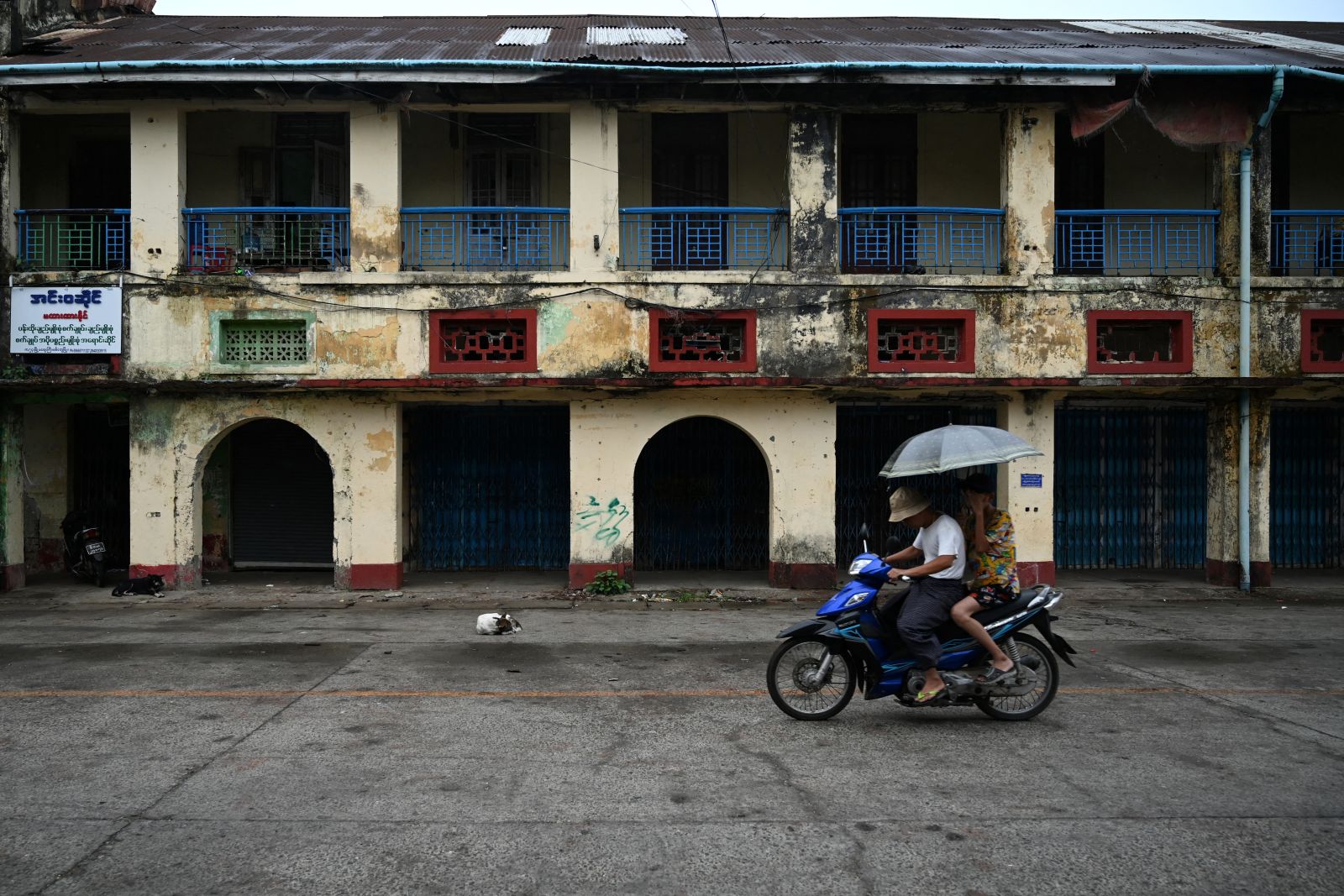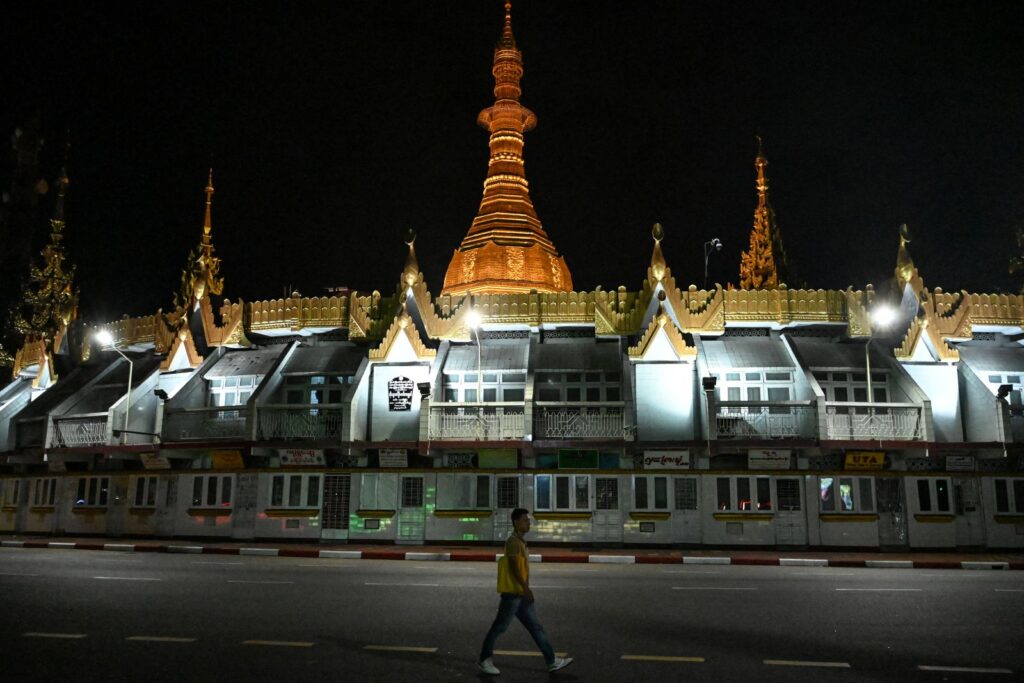
Thefts and robberies, often violent, have skyrocketed in Myanmar’s commercial capital since the February 2021 coup, with residents setting up night patrols in some areas as police do little to stop the surge in crime.
By SWE HLAING HTOO | FRONTIER
One evening in September, a group of young people attacked a teenage boy at the bustling night market on Bargayar Road, in Yangon’s Sanchaung Township, leaving him lying in a pool of blood.
The incident took place in the middle of a crowd, but some people did not notice what was happening while others were too afraid to intervene.
“A passerby stabbed the boy with a knife. I only saw what had happened when he cried out,” an eyewitness told Frontier on condition of anonymity. “There were many people around, but you could have been stabbed too if you tried to pull them apart. We didn’t dare to step in.”
Eventually, six youths aged 14 to 18, a young woman and a 21-year-old man suspected of involvement in the incident were arrested by police and taken to the Sanchaung Township Police Station, while the victim was taken away in an ambulance.
It is unclear what provoked the attack, but Yangon residents say this is just one example of the increasing insecurity plaguing Myanmar’s biggest city and commercial capital.
Before the February 2021 military coup, Yangon was often described as Myanmar’s “city that never sleeps,” but residents say streets that were once crowded after dark have become deserted by around 8pm, as few dare to go out at night.
Gang fights, crime and extortion have become increasingly frequent in both downtown Yangon and the city’s outskirts since the military takeover, as the country was plunged into widespread civil war and law enforcement crumbled.
Ma Aing Kyin, a resident of Yangon’s West Hlaing Tharyar Township, told Frontier that intimidation, theft, robbery and rape have become a constant threat.
“I don’t dare to go out after dark. One day, one of the girls from our garment factory was returning home after getting something to eat when a group snatched her phone,” the 38-year-old said. “She tried to pull it back, but three or four more people surrounded her, so she had to leave the phone and run home.”
“I always carry a small knife when I go out,” she added.
A crime wave
Meanwhile, commuters say pickpockets have become more common on Yangon’s buses. According to residents, most of them operate in groups to prevent bystanders from noticing what they are doing or to quickly pass the stolen items on to others who then escape the scene.
Ko Maung Nge, a 26-year-old resident of Tarmwe Township, is among the many Yangon residents who have been targeted by pickpockets.
“I noticed about five people pushing me when I reached my bus stop,” he told Frontier. “As soon as I realised what was going on, one of them cut open my bag. When I shouted, he cut my hand with a knife, but they couldn’t take anything.”
There is little recent official data on crime in Yangon. The police have not released information on the number of robberies that have occurred in Yangon so far this year, and Frontier’s requests for information went unanswered. According to the Myanmar Statistical Yearbook 2024, recorded robbery cases rose from 16 in 2019 to 174 in 2023 in Yangon Region, a 988 percent increase, while murders rose from 178 to 448, a 151pc increase. By contrast, during the same period narcotics offences in Yangon fell 48pc from 2,202 to 1,155, while gambling cases dropped 24pc from 1,073 to 811.
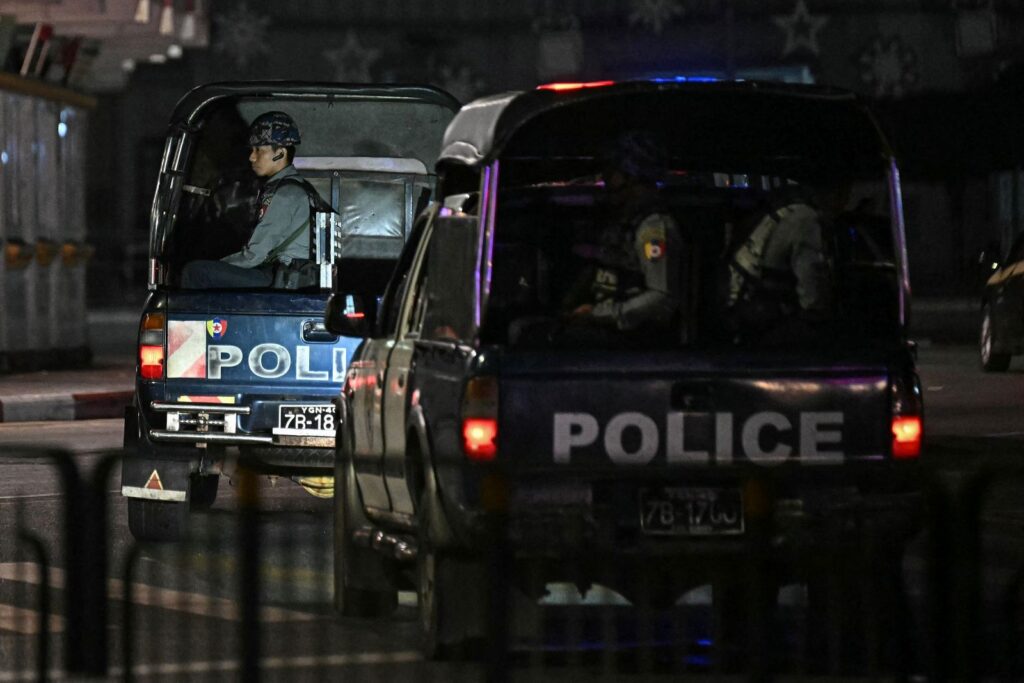
Despite the lack of updated data, residents say it is clear the city has become increasingly dangerous, to the point that they feel unsafe even in their own homes. According to Ma Khin Thu Zar, a resident of Yankin Township, many people have installed security cameras in their houses and are keeping the entrances of apartment buildings locked around the clock for security.
“It’s not safe on the streets and it’s not safe at home either,” the 48-year-old said. “Just the other day, new water meters were installed at our apartment building, but they were stolen less than two days later. Thieves are breaking into houses even during daytime. Ground-floor apartments are particularly dangerous.”
A survey conducted by PACE-Myanmar in August among people aged 18 to 35 in 12 townships shows that young people in Yangon are feeling increasingly unsafe.
According to the survey, 89pc of respondents were most concerned about going out at night and 82pc were concerned about being robbed. Nearly eight out of 10 young people were fearful of being physically assaulted or sexually harassed, while 18pc said they were worried about their security even inside their own homes.
A lawyer who spoke with Frontier on condition of anonymity explained that law enforcement has also weakened since the coup, with criminals gaining the upper hand.
“The organisations responsible for cracking down on crime have become lax,” he said. “The police do not take effective action and courts do not impose effective punishments. Because of these factors, criminals have become emboldened.”
He also claimed that police are increasingly doing business with criminals, making law enforcement officials reluctant to take action against crime.
Taxi drivers in danger
Taxi drivers also say that cases in which people hire taxis and rob them have become more frequent – sometimes with fatal consequences.
U Isalam, a man living in Tarmwe Township who has been working as a taxi driver for about 20 years, was a victim of one of these robberies in June last year. It was a rainy day and he was nearing the end of his shift. As it was getting dark, he picked up three people in North Okkalapa Township and drove them toward Insein Township.
“They told me to stop near a dark stretch of road where there were no houses,” he told Frontier. “I stopped and at that moment, one of them grabbed me by the collar of my shirt from behind and choked me. Another pulled out a knife and demanded everything I had.”
“They took more than K100,000 [US$22 at the market rate] that I had earned during the day and my phone. Then the third man started stabbing me. They pulled me out of the car and kicked me.”
By a stroke of luck, a car passed by during the assault. U Isalam cried for help and the car came back, prompting the three robbers to run away.
“I was lucky to survive,” he said. “These days, people even get robbed during the daytime. I used to drive my taxi until late at night, but I don’t dare to do that anymore. More and more people are willing to commit such crimes.”
“Of course, my income has gone down. But what else can I do? If that car had not reversed and come back that day, I could have been killed.”
Night patrols
Feeling that they can no longer rely on the police, some residents have set up night patrols in their own neighbourhoods.
“People in the ward have to take turns standing guard every night,” said Ko Aung Aung, a 42-year-old resident of Shwepyithar Township who participates in his neighbourhood’s patrol. “We can’t rely on the police. There are many robberies, so we started doing this at the beginning of the year. Before we started, we were constantly hearing about houses on this or that street being broken into and robbed at night.”
“If the patrol guards see anyone suspicious, they strike a metal rod loudly to alert the neighbourhood,” he added. “People come out and search for the suspect and then hand them to the police if they find them.”
According to Aung Aung, his neighbourhood patrol usually apprehends at least three suspected thieves per month.
“Once a thief broke into a house and killed the homeowner after the owner discovered the intruder,” he said. “We saw the thief after he came out of the house and caught him. It was only later that we learned he had killed the owner.”
“In the past, thieves would run away if they encountered the homeowner while stealing. But more recently, they have started attacking people when they are caught. It’s very frightening.”
According to Aung Aung, factories in Shwepyithar have stopped scheduling nighttime overtime work because of the danger of being out after dark, reducing workers’ incomes.
“Now, there is hardly anyone left on the streets after 7pm,” he said. “You can’t rely on anyone. You just have to look after your own safety.”