By AFP
Under monsoon skies leaden with rain, Myanmar rice farmers despondently tend their paddy fields, doubtful the deluge will bring bountiful harvests during a fuel and fertiliser crisis caused by the Iran war.
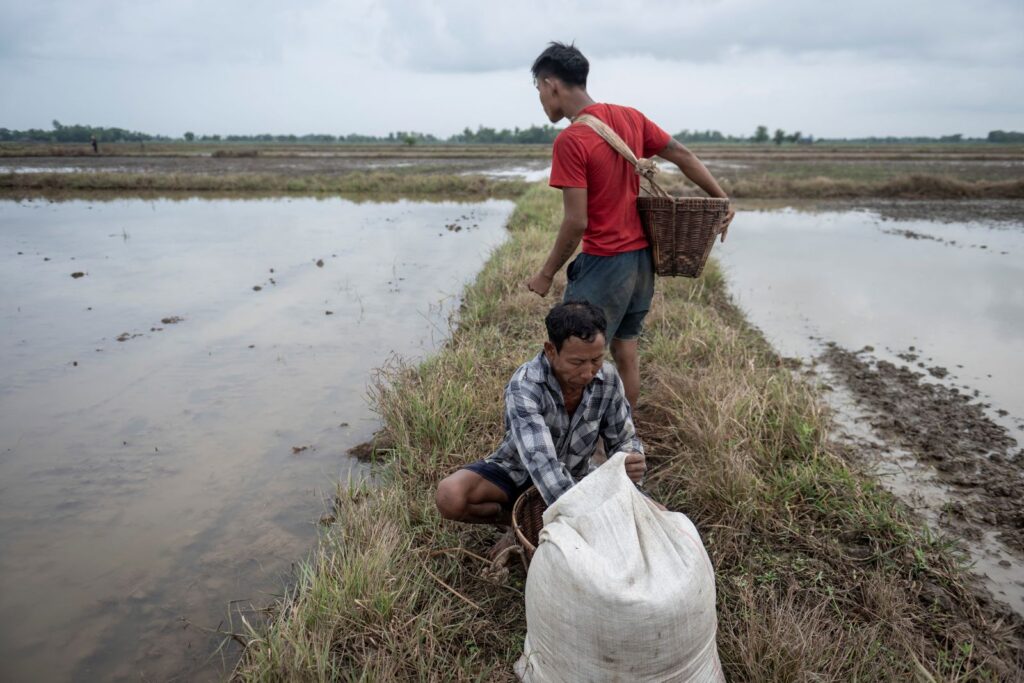
“If prices continue to rise, I will be a beggar,” says veteran farmer U Soe Naing, perched on a sack of rice seed overlooking his 12 hectares (30 acres) of rented land outside the delta town of Kawhmu, in Yangon Region.
“I may give up working as a farmer, but growing rice is my calling,” the 49-year-old told Agence France-Presse between thunderous sheets of rain heralding the start of planting season across Myanmar’s riverine south.
The United States-Iran war continues to send supply shocks worldwide, even as a fragile ceasefire holds.
Conflict closing the Strait of Hormuz has been particularly damaging to Asia, the destination for 80 percent of oil transiting the seaway, according to the International Energy Agency.
Myanmar, already gripped by a humanitarian crisis amid its civil war, is vulnerable further still.
The Southeast Asian nation imports 90pc of its fuel oil, according to official figures.
Up to 95pc of its chemical fertilisers – produced in abundance in the Gulf where natural gas is burnt to synthesise ammonia – is also imported, according to the United Nations’ World Food Programme.
Spiking prices of both commodities have left Myanmar farmers struggling to fuel rotavators needed to till fields or buy fertiliser to boost their seedlings at a crucial time in the agricultural calendar.
The WFP warns a 50pc drop in fertiliser use could result in farming output dipping up to 15pc in Myanmar, where food insecurity is already widespread.
“The current situation is the most difficult time we have faced,” said Soe Naing. “As for my hope, I have nothing other than my fields.”
Barren hope
More than 4,000 kilometres (2,500 miles) from the embattled Strait of Hormuz, U Moe Aung’s paddy – situated a 15-minute boat ride up a serpentine creek – is beholden to the shock of the global shipping crisis.
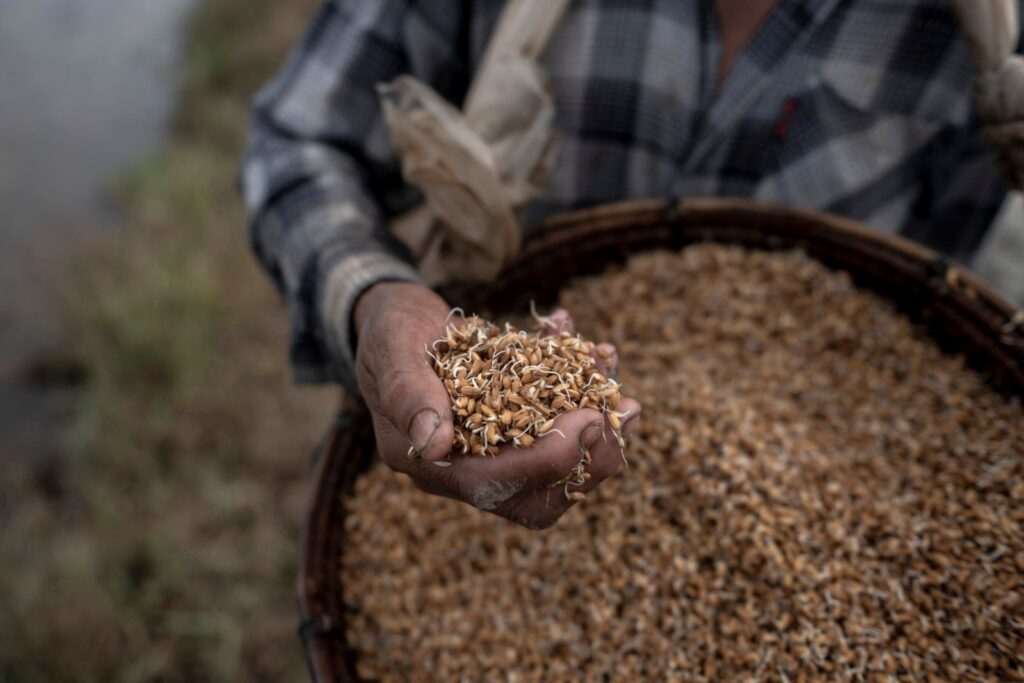
He sows seed onto the mud but plans to ration half a bag of fertiliser per acre this year – one-sixth of what his crop needs to thrive.
“I am just doing it because I own fields, but I don’t want to do it,” says the 53-year-old. “I have no willingness to continue if this situation doesn’t end.”
Prices for a 50-kilogram bag of fertiliser have multiplied up to five times, he estimates, now costing as much as K200,000 (about US$48 at the market rate).
Moe Aung works with his hands in the sucking mud of the humid paddy fields.
But much of his profession now entails complex mental arithmetic and accountancy as he struggles to manage a cycle of high-interest debt worsened by the far-off Middle East war.
Buying fertiliser on credit and paying the bill after the harvest is common, but this year Moe Aung fears the sums will simply not add up.
“I don’t think the expense and the revenue will be equivalent,” he says.
“Previously, we were comfortable; we could look after our parents, we could go for some social activities, our family was peaceful and happy,” he said.
“That is all disappearing.”
‘History full of doubts’
Myanmar was once the world’s rice bowl, exporting more of the staple than any other nation in the years before World War II.
Decades of post-independence conflict and instability, and now the civil war sparked by the February 2021 military coup, have eroded the country’s agriculture sector.
The coup deposed the elected government of Daw Aung San Suu Kyi, Myanmar’s popular democratic leader who remains detained and who once held Kawhmu’s parliamentary seat.
The resulting war has killed more than 90,000 people on all sides, monitoring group Armed Conflict Location and Event Data says, and displaced more than 3.7 million, according to the UN.
The UN describes Myanmar as a country mired in a “polycrisis”, with the effects of the Middle East conflict another layer of degradation.
But there may be yet another problem on the horizon.
Forecasters predict this year will see a strong iteration of the El Niño weather phenomenon, which typically brings heatwaves and drought to parts of Southeast Asia.
It is due to start as soon as this month – another global shock with the potential to reverberate in fragile Myanmar.
“If we continue this way, farmers could disappear from this country,” laments Myanmar Farmer Union chair Daw Su Su Nway.
“We do not want future generations to read a history full of doubts, wondering if these farmers truly existed.”