OBITUARY
The documentary “Burma Soldier” tells the story of former political prisoner Myo Myint, but its triumphant ending masks the challenges faced by many people forced to flee Myanmar, even after resettlement in a “safe” country.
By NIC DUNLOP | FRONTIER
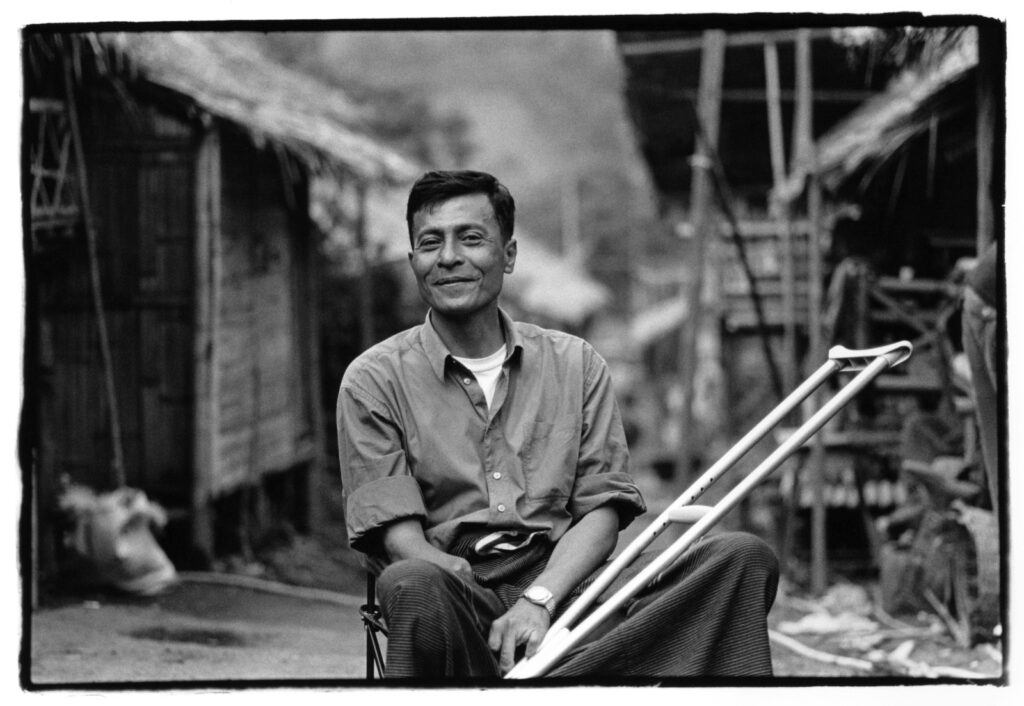
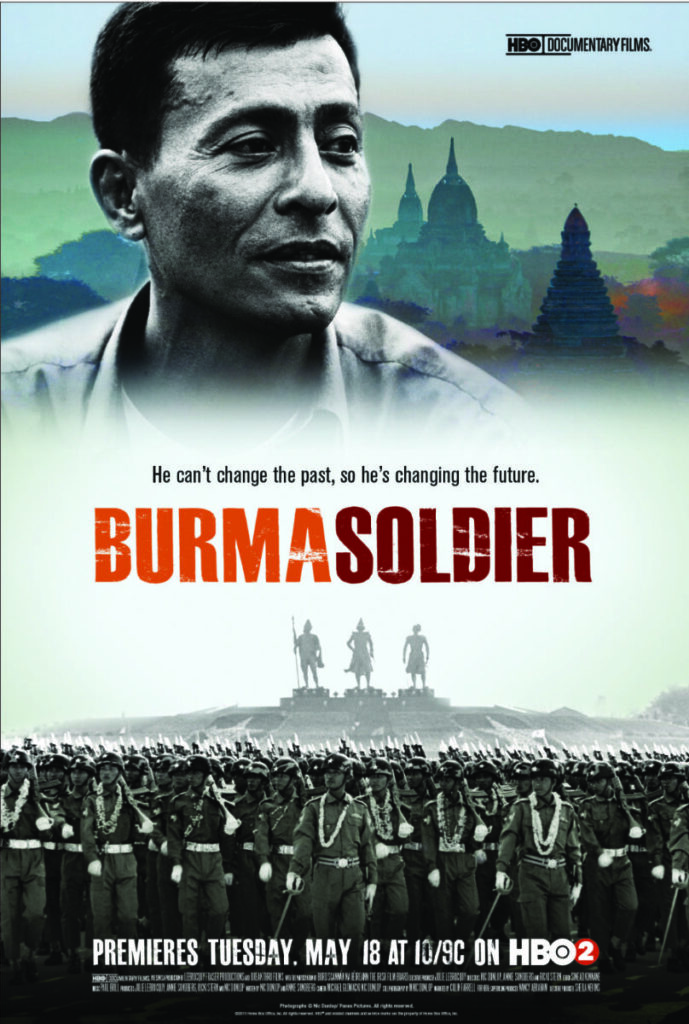
U Myo Myint’s life was the subject of the Emmy-nominated HBO film “Burma Soldier,” which I co-directed with Annie Sundberg and Ricki Stern. Narrated by Colin Farrell and released in 2011, it tells Myo Myint’s extraordinary story in his own words: from his childhood in Yangon to his time as a young soldier in the Myanmar military, then as an activist, a political prisoner and finally a refugee.
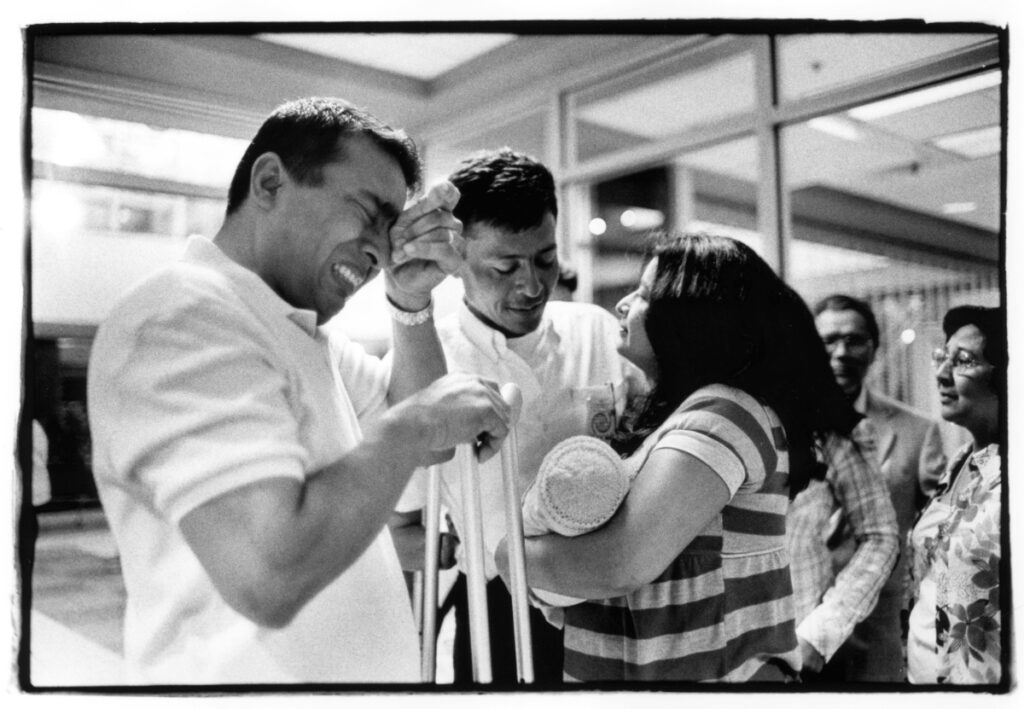
With a small crew, I spent many hours in the Umpiem Mai refugee camp in Thailand recording his story in detail. We then accompanied him to the United States, where we filmed his reunion with two of his siblings – a brother and a sister – in Fort Wayne, Indiana. The film ended with U2’s “Walk On” over scenes of Myo Myint at the Statue of Liberty and protesting Myanmar’s military regime in New York.
Those final scenes conveyed the idea of a happy conclusion. When a refugee arrives in a third country, they are finally out of harm’s way: they begin a new life, start a career, have a family, educate their children.
For Myo Myint, who had endured more hardship than most, what followed was far more complicated.
The last time I saw him was in February last year in Bangkok. He showed me the raft of medications he was taking, placing them all on a table and explaining what they were for: painkillers, pills to help him sleep, pills for nerve damage, pills for depression.
Last month, on the eve of his 63rd birthday, Myo Myint took his own life – a tragic end to an extraordinary life. It came as a shock, but not as a surprise. He was carrying the weight of prolonged and intense trauma.
From soldier to refugee
Myo Myint joined the army in 1979 at age 17 and fought on the front lines against ethnic armed organisations in Shan and Kachin states. He was a witness to rape and other atrocities committed by the military, including forcing villagers to act as human minesweepers.
“I saw a great deal of torture,” he said.
Several years after enrolling, he was severely injured in battle, losing an arm, a leg and several fingers. He was discharged from the army and later became involved in politics, contacting underground resistance groups with the aim of bringing Myanmar’s civil wars against ethnic minorities to an end.
He later participated in the 1988 uprising in Yangon, persuading other soldiers to join the protests calling for an end to military rule. He joined Daw Aung San Suu Kyi’s National League for Democracy but was arrested, tortured and imprisoned for 15 years.
As a former soldier, he was considered a traitor by military intelligence. The abuse was relentless.
“They stripped me naked, punched me and beat me,” Myo Myint said. “‘You motherfucker!’ they screamed. ‘You’re a former soldier! Why are you turning people against the army?’”
At one point, they took his crutches away and placed him inside a plastic bin and slowly filled it with water. When it reached his neck, he wriggled as much as he could and made the bucket tip over with him inside.
“Being at the front line is nothing compared to the terror of being interrogated,” he told me.
Political prisoners were pressured to sign a document renouncing their activism. Myo Myint refused. He was transferred to several prisons, including Insein in Yangon, but he was never formally charged during his 15 years of imprisonment.
After his release in 2004, he left Myanmar for Thailand, where he worked with former political prisoners in exile on the border. This was where I met him in 2005, before he was interred in the Umpiem Mai refugee camp. In 2008, he was granted asylum in the US.
He settled in Fort Wayne. The city is home to one of the largest concentrations of Myanmar refugees in the US, with estimates ranging from around 8,000 to more than 25,000.
Myo Myint married Ms Karen Bender, a social worker with the organisation Catholic Charities, who helped with refugee resettlement. He kept up with developments in Myanmar by spending hours online.
“There were times when he would be off Facebook and away from all of that for his mental health, but not for very long,” Bender said. “He did everything he could to help Burmese people here and inside. He used to send money to people inside Burma, to people in Thailand supporting the political prisoners.”
His concern about the welfare of others stemmed from his time in prison “seeing and hearing friends being tortured.”
Myo Myint told me he could sleep only a few hours each night.
“I often have nightmares and flashbacks,” he said. “Sometimes they’re about the abuses I witnessed, but the thing I remember most is the time I was injured. That’s with me all the time. I don’t have to try and remember it, it’s constantly in my mind.”
Myo Myint’s experiences left him profoundly damaged. At times, he took to drinking to dull the pain when it became overwhelming. On several occasions he broke down when we talked.
Many refugees suffer some degree of post-traumatic stress. Mr Edward Blakeney, a psychotherapist who has worked with Myanmar refugees, explained that most trauma research focuses on single events.
“It’s easier to measure,” he said. “There’s a ‘before’ the event, and an ‘after.’”
It is far more difficult to measure, let alone understand, prolonged trauma like Myo Myint’s experience of violence and torture that extended over years, he said.
American journalist Mr John Gevers said his friend Myo Myint had “a mission to help others around him, particularly fellow refugees.”
For his first few years in the US, Myo Myint acted as an interpreter for many organisations helping refugees, including those requiring professional mental health support and medical care.
He served as Indiana’s representative to the Washington, DC-based Refugee Congress, and spoke to many governmental entities, including the US state department. He also gave presentations about his life at universities for students of diplomacy and justice.
Myo Myint loved Fort Wayne’s public library and exploring museums, history and art, Gevers said. Knowing that many first-generation refugees would not get out to experience American culture firsthand, he created and shared videos on social media with narration in Burmese so people could stay connected to their new surroundings.
“He cared about fellow humankind a great deal,” said Gevers.
Family stress
After the release of “Burma Soldier” in 2011, a Burmese-language version was posted online for those inside Myanmar. DVDs of the film were also distributed inside the country.
While two of Myo Myint’s siblings had already settled in Fort Wayne, his older brother, U Win Myint, and two other sisters, Ma Swe Zin Aye and Ma Me Me Aye, still lived in Yangon. Their house was raided by soldiers and police looking for DVDs of the film.
Terrified, they called Myo Myint in the US, who told them to flee to the Thai border. The regime was well-known for persecuting relatives of dissidents who were beyond their reach.
Win Myint, Swe Zin Aye and Me Me Aye arrived on the Thai border in April 2011. They were taken to the same camp where their brother had lived, hoping to be reunited with him, as well as their mother and other siblings who had already settled in the US.
Refugee resettlement to the US was painfully slow and selective. Even recognised political refugees faced years of delays for background checks, security vetting and medical clearances, worsened by backlogs, shifting US admission caps and administrative bottlenecks.
Admissions fell sharply under US President Donald Trump’s first administration from 2017 to 2021, which cut refugee caps and slowed processing. President Joe Biden partially restored the programme, but resettlement remained uneven, even as displacement from Myanmar surged after the 2021 military coup.
Myo Myint’s siblings were interviewed by Human Rights Watch, which declared they met the definition of political refugees, meaning they had been targeted by the regime as opposed to having fled because of fighting. But it seemed nothing could be done to help them. For years they remained stuck in the camp.
In 2024, 13 years after their arrival in Thailand, Me Me Aye became ill and died.
Last year, cuts to international aid, especially from the US, led to the shutdown of major food and healthcare programmes in camps along the Thailand-Myanmar border, leaving over 100,000 refugees without essential support.
Win Myint became ill and died in early 2025, in part because the camp clinic no longer had the oxygen he needed, leaving Swe Zin Aye alone.
To make matters worse, in January last year, the second Trump administration suspended the Refugee Admissions Program, halting all refugee travel and processing.
With no hope of reunification with her brother in the US, Swe Zin Aye was severely depressed.
Myo Myint flew from Fort Wayne to Thailand to give Swe Zin Aye moral support. He also hoped to talk with people who could help get his sister out of the camp and to the US. To my knowledge, no one agreed to meet him.
“He would get depressed and, when suffering with depression the whole time and having nightmares, it was hard,” Bender said, adding that he continued seeking solace in alcohol. “He definitely drank to get rid of demons.”
Myo Myint felt increasingly isolated. For many refugees who have endured traumatic events, there can be a strong sense of alienation amid a new culture.
“The world has no coherence anymore,” said Blakeney. “There’s nothing intelligible. There’s nothing good or beautiful, binding reality together – it can become unbearable.”
Bender told me Myo Myint felt considerable guilt about his siblings being trapped in the camp. He felt responsible for them and tried to do everything he could to get them out.
“The refugees in the camps were low on food too because of aid cuts,” she said. “It was all weighing very heavily on his mind.”
Community standing
Myo Myint was held in high regard within Fort Wayne’s refugee community thanks in part to “Burma Soldier.” Gevers recalled that walking into Myanmar refugee functions with him was “like I was walking in with a movie star.”
It was also because people recognised his singular and principled act of turning against the military and becoming an activist, for which he paid such a high price.
According to his mother’s wishes, Myo Myint was buried on February 12, two days after his birthday, in the Fort Wayne Muslim cemetery.
I watched shaky, handheld phone footage of the event online. A large digger scooped soil from the frozen ground, and several members of the Myanmar Muslim community lowered his body into the grave. Snow lay all around. It was Union Day in Myanmar – a national holiday commemorating the signing of the 1947 Panglong Agreement for a unified nation, something for which Myo Myint struggled much of his life.
“It was a sad and stark affair on a very cold winter’s day,” Gevers, who attended the funeral, wrote in an email. “His wife Karen is distraught, as you can imagine, as are his immediate family members, including his mother, sister and brother who live in Fort Wayne.”
Gevers read a tribute at the funeral.
“Myo Myint worked tirelessly after coming to his country of asylum to help others resettle. He also worked to help our native-born people to understand the newest residents’ plight and their will to coexist peacefully and contribute to their new host land,” he read.
“Myo Myint could have breathed a huge, well-earned sigh of relief and lived out the rest of his life only gardening and enjoying his dogs and the love and admiration of his adoring wife, Karen, and family. He did those things, for sure, but he also kept fighting for others and for his country.”
Bender, speaking of Myo Myint’s activism in Myanmar, said, “He was really brave.”
“He knew that he would get arrested. He couldn’t flee to the jungle like the others – he didn’t have the physical means. I don’t think he would have fought anyway. He was against the fighting,” she said. “He was an incredible human being.”
Bender added that during Eid al-Fitr festivities in Fort Wayne earlier this month, “everyone really missed Myo Myint.”
“He was just a lot of fun to be around. People who didn’t know him didn’t see that side of him,” she said. “He was always smiling.”
Myo Myint, February 10, 1963, Yangon, Myanmar – February 9, 2026, Fort Wayne, Indiana, USA.