OPINION
Can the Myanmar junta navigate its way in a nascent new world order, with great powers like China and the United States asserting their control over their “areas of influence”?
By GUY DINMORE
On January 3, the day United States special forces snatched Venezuelan President Nicolás Maduro from Caracas, Secretary of State Marco Rubio found time to issue a statement reaffirming US commitment “to the people of Burma”.
It was an apparent coincidence, but the timing of the statement did not go unnoticed in Myanmar, where social media was soon flooded with appeals to the US to remove another despot ruling over a “narco-trafficking state”.
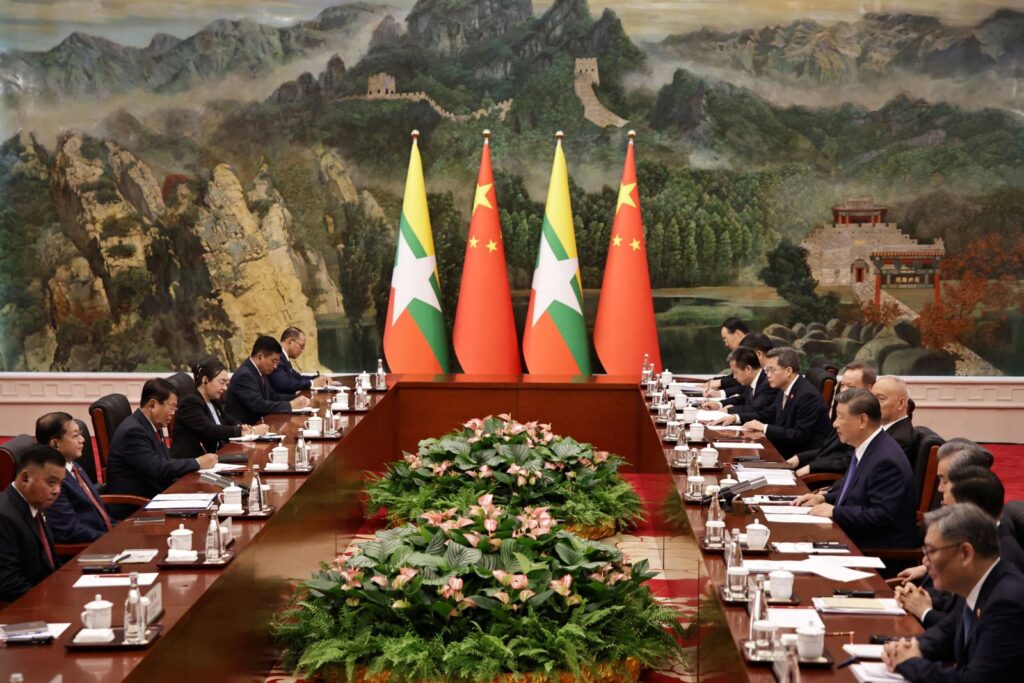
However, while it might be possible that junta chief Senior General Min Aung Hlaing is peering over his shoulder in fear at possible US action, he is more likely looking in a different direction – toward Beijing.
Since Donald Trump’s inauguration as US president in January last year, the old world order appears to be unravelling quickly. It is seemingly being replaced by the return to a scramble of rival great powers asserting control over their spheres of influence.
Trump covets Greenland and wants to “take back” the Panama Canal; Vladimir Putin sees Ukraine, Belarus and Russia as a spiritual entity to be reclaimed as one; China has just conducted highly threatening wargames in the seas around Taiwan while pursuing military occupation of disputed reefs and islands across the South China Sea.
Superpower imperialism is the trend – and minor players beware, especially those already weak and fragmented.
Where does that leave Myanmar? As just another domino to fall? To some extent it is already happening. Min Aung Hlaing’s regime – which controls all major cities but considerably less of the countryside in Myanmar – would not last long without the arms, technology and training supplied at a price by Russia and China.
Only China’s direct intervention, through pressure on ethnic armed groups on their shared border last year, allowed the junta to regain a string of strategic towns that it had lost in humiliating defeats after the Three Brotherhood Alliance launched Operation 1027 in October 2023.
However, Beijing’s price is high: access across Myanmar to a deepwater port on the Indian Ocean in Rakhine State, favourable investment terms and a secure supply of natural resources, particularly rare earths. And those are just for starters.
In this context, China gave its clear backing and endorsement of the junta’s election currently underway in Myanmar, denounced as a sham by most open democracies and the United Nations – but not by the US.
Diplomats in Yangon say the US rejected a proposal by the European Union to issue a joint statement last month condemning the election. Instead, US forces took part in the ASEAN-US joint maritime exercises, co-hosted by Indonesia and the US in December – and with the participation of the Myanmar navy.
This followed the US Department of Homeland Security’s decision in November to add Myanmar to a growing list of countries whose nationals will lose their Temporary Protected Status. About 4,000 Myanmar in the US are affected.
DHS Secretary Kristi Noem, to the surprise of almost everyone in Myanmar, deemed that it was “safe for Burmese citizens to return home”. Myanmar, she said, had made “notable progress in governance and stability, including the end of its state of emergency, plans for free and fair elections, successful ceasefire agreements, and improved local governance contributing to enhanced public service delivery and national reconciliation”.
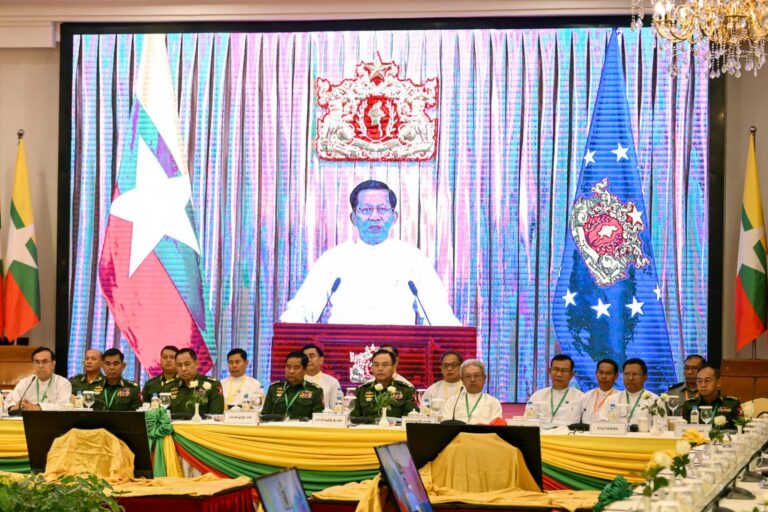
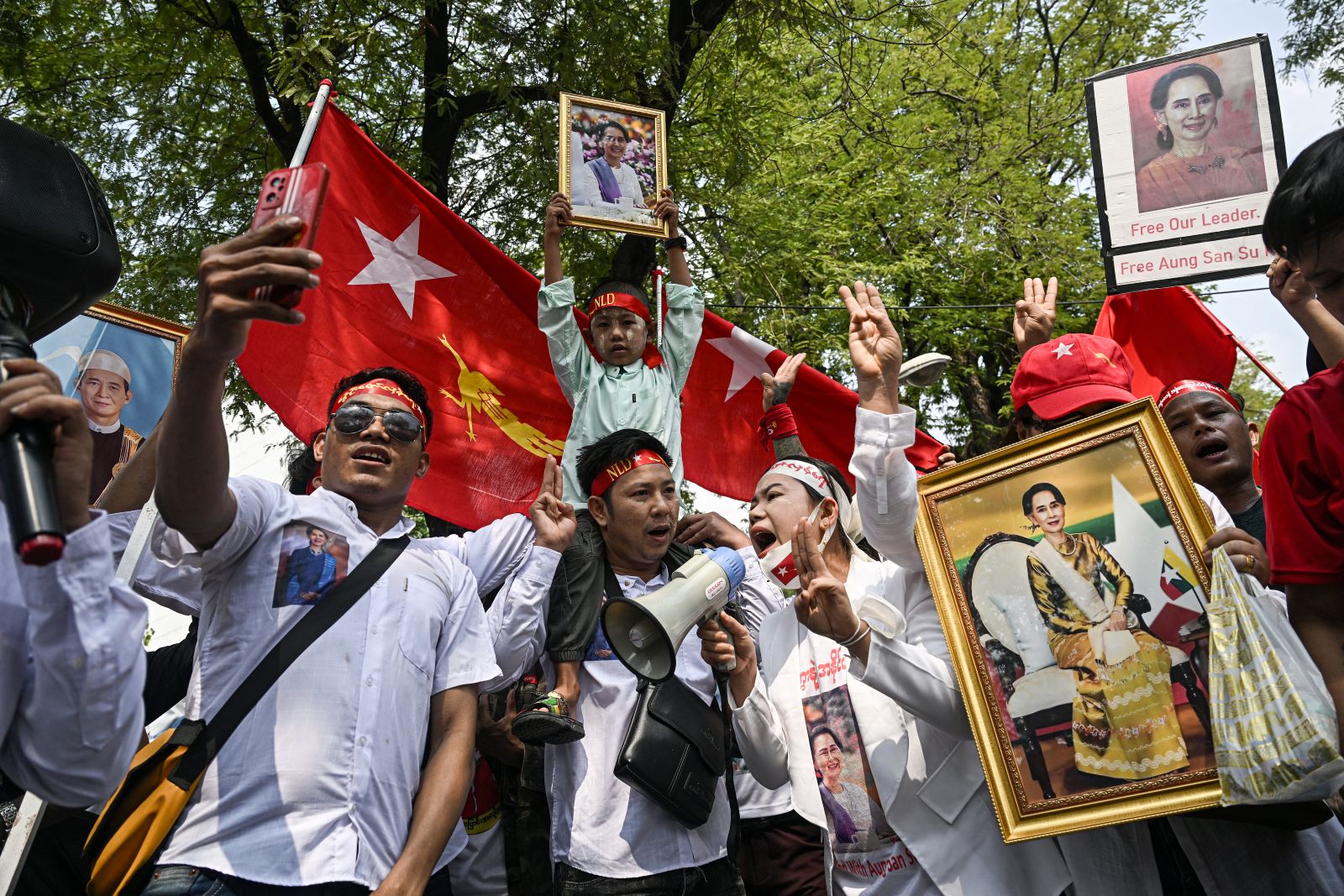
Min Aung Hlaing and his fellow generals – responsible for holding more than 22,000 political prisoners in Myanmar’s jails and killing thousands of civilians in five years of civil war – seized delightfully on this public show of support from the US. Trump is now hailed as a new national hero in the junta-controlled media. On the street, his name is dirt.
But the change of direction by the US under Trump has less to do with keeping Min Aung Hlaing in power than with denying China and Russia control over Myanmar.
However, as much as the junta might use its air power to bomb ethnic armed organisations and other resistance forces into submission, its war seems unwinnable, much as it has been since independence in 1948.
Myanmar may not end up like Laos, a de facto client state of Beijing with Chinese high-speed trains traversing the landscape, but nor is it united and strong enough to be a Vietnam standing up to China on its own terms.
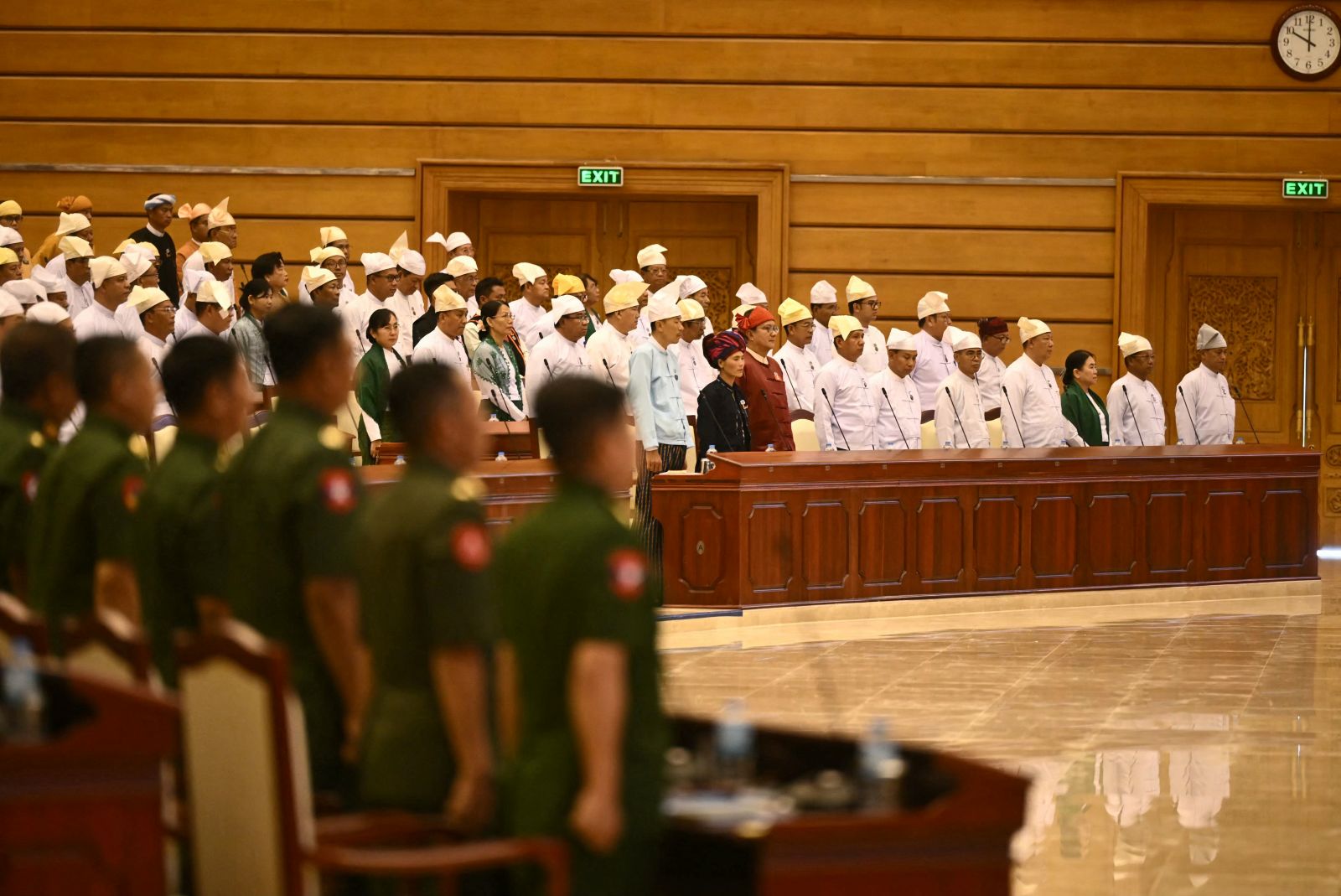
Meanwhile, the regime’s election, which will conclude on January 25, lacks any semblance of being free and fair. However, it does present Min Aung Hlaing with the opportunity to install a nominally civilian government and initiate a break with the past.
Such a break should begin with the release of political prisoners and the end of forced conscription and attacks on civilians. Many countries would be ready to respond. ASEAN is set to extend its dealings with Myanmar, as are other interested parties like India. The US has sent signals, as have a few of the more pragmatically oriented European governments keeping their embassies open in Yangon while others close.
Min Aung Hlaing, however, shows little if any sign of relenting, likely believing that the military will prevail over enough territory to keep the country in a more or less functional state. Meanwhile, China will continue playing the long game. Its shadow in Myanmar is lengthening.
Guy Dinmore is a former editor of the Myanmar Times and has also reported from Washington for the Financial Times and Beijing for Reuters.