Abortion carries a strong social stigma and is illegal in Myanmar, pushing many women to seek it in Thailand or, for those who cannot afford travelling to the neighbouring country, the use of dangerous pills bought on TikTok.
By REDDY SIMON | FRONTIER
Ma Ni Ni arrived at the Klongtun Hospital in Bangkok on April 29 seeking an abortion after her boyfriend forced her to terminate her pregnancy. About 12 weeks into gestation, the 23-year-old had traveled alone from Yangon after consulting with a female cousin living in the Thai capital.
She underwent a surgical abortion which took about two hours and cost her nearly 20,000 baht (US$616), including a private room for one day of rest.
“It was a relief that I had a passport and was able to save up the money,” Ni Ni told Frontier, using a pseudonym to hide her identity due to the stigma attached to abortion in Myanmar.
Ni Ni had a successful abortion and felt physically well, but an acute depression lingered. It was the emotional weight of postabortion that seizes many women, accompanied by a sentiment of frustration and a hormonal storm.
There was also an image that haunted her even after she returned to Myanmar: the contemptuous smile of a nurse.
“At the end of the surgery, the pain was extreme despite the anesthesia. I shouted and cried out loud. It was then that the nurse smiled at me,” Ni Ni recounted. “It was a scornful smile, she was mocking me as if I had been playing around and now I was afraid of the pain.”
“I had encouraged myself all the way from home. I prepared myself to be mentally strong, but when I saw that nurse smiling I felt so sad I wanted to die right there,” she said.
Miss Pumpkin, of the Planned Parenthood Association of Thailand, told Frontier that such a behaviour is unprofessional.
“A nurse or health care provider performing abortion or post abortion care must obtain special training, not every nurse or doctor can do it,” she said, using a pseudonym. “The care providers must have not only the skills but also moral understanding and empathy for the patients”
“Nurses are Buddhist in many clinics in Thailand, and they believe that abortion is akin to killing. So, when they provide abortion services, they might feel guilty,” she added. “In fact, if you are specialised in abortion and care services, you must understand that it’s not killing, it’s saving women’s lives.”
Crossing the border
Abortion is widely seen as a taboo in deeply conservative Myanmar, where even premarital sex is judged harshly and carries a strong social stigma. Except for cases where the mother’s life is in danger, it is also a criminal offense that can be punished with up to three years in jail. This has pushed many women to undergo dangerous procedures with tools like sharp sticks and spikes carried out by illegal abortionists, or in some cases by the women themselves.
More recently, increasing numbers of women who want to terminate unwelcome pregnancies are travelling to neighbouring Thailand, where abortion was made legal for pregnancies up to the 12th week in February 2021. Hospitals and private clinics across the country offer, under the Thai Ministry of Public Health’s guidelines, two safe and approved methods: abortion pills and surgical abortions.
However, abortion in Thailand is not cheap. Medical pills run to at least 5,000 baht, while surgery can cost up to 10,000 baht, not including other expenses. Moreover, non-Thai citizens usually have to pay more than nationals.
Ma War, a 28-year-old displaced Shan woman living in the northern Shan State hub of Lashio could only undergo abortion in Thailand thanks to an organisation supporting internally displaced people who funded her travel. Unable to raise a child as an IDP, she crossed the border illegally in February to terminate her pregnancy at a clinic run by the Planned Parenthood Association in the Thai northern province of Chiang Rai.
“In the past, I believed that women who got an abortion were bad and wrong,” Ma War told Frontier, also using a pseudonym to protect her identity. “I had never even spoken the word ‘abortion’ out loud in my life.”
Pills sold on TikTok
For those who cannot afford travelling to Thailand, a new way to get an abortion has arisen in recent years: pills sold on TikTok. But women’s rights activists warn that this is risky, because there is little medical supervision, the quality of the pills is uncertain, and there is no post-abortion care.
Frontier found more than 300 shops on TikTok mentioning “Abortion Pills” in Burmese in their titles, with sellers openly advertising mifepristone and misoprostol, two medicines commonly used in tandem for pregnancy terminations.
Many of these shops are operated from Thailand by Myanmar migrants who mail the pills, some of them produced in India, to Myanmar and other countries in the region. The prices vary depending on the shop, and some even provide short trips to Thailand for surgical abortion.
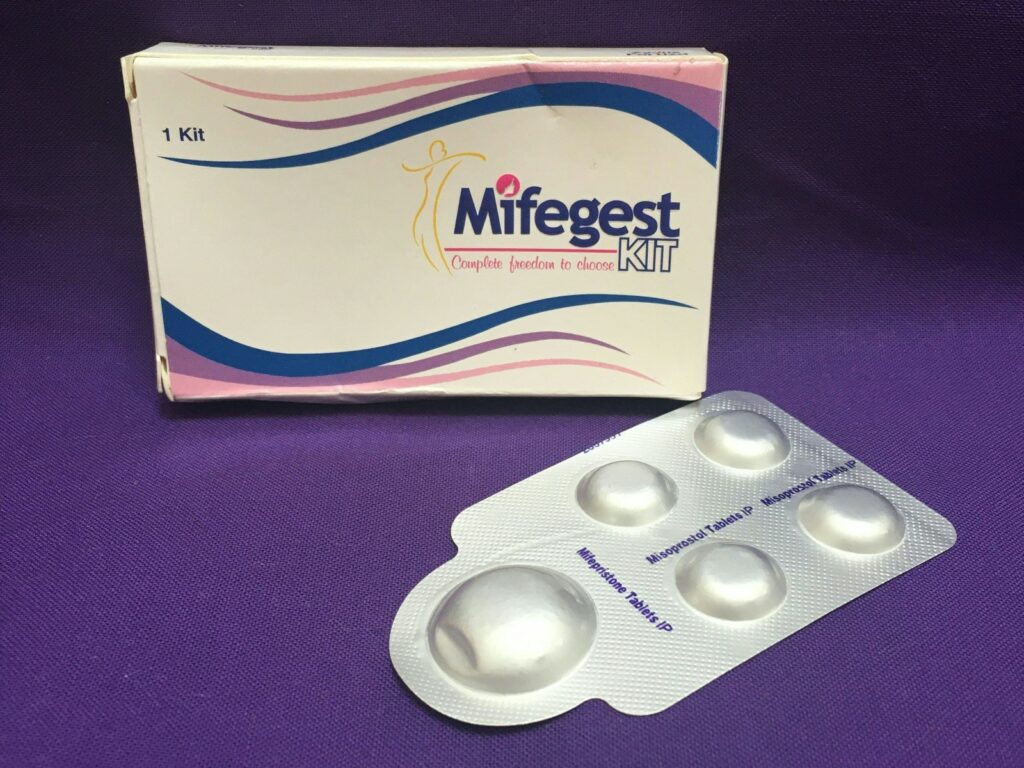
One of them is “Abortion Pills Thailand”. With 2.7 million likes on TikTok, it delivers its products to Myanmar migrants in Thailand, Singapore, Malaysia, and Laos.
“We send an average of 23 boxes per day,” the seller of Abortion Pills Thailand told Frontier in a private message. Each box contains a combo medication that costs K600,000 (about $142 at the market rate).
Ma Phyu is one of the women who have conducted an abortion at home with pills bought on TikTok. The 31-year-old, who also used a pseudonym to hide her identity, agreed with her boyfriend to terminate an unwelcome pregnancy in September last year because she has been unemployed since the 2021 coup and they barely had enough money to survive.
“After the abortion, I suffered four weeks of non-stop bleeding,” she said. “I was very terrified and felt helpless.”
When she messaged the seller asking for counsel, they just replied that it is normal for most women to have constant bleeding for weeks after an abortion.
By the fourth week, the bleeding had stopped, but she was suffering from bacterial vaginosis, an infection caused by the excessive growth of bacteria in the vagina, usually triggered by hormonal or physical changes after abortion.
She had to take contraceptives shortly after the abortion to prevent a second pregnancy. The contraception pills caused intense hormonal changes, leading to depression and mental instability. Ma Phyu said she wanted to cry for no reason and felt lost.
“At night, lying in bed, I kept searching online for where I could discuss my problems,” she said. “I wanted to talk to a professional and discuss my body openly, but I couldn’t find anyone.”
Dr. Mar Oo – a specialist in women’s reproductive health and maternal care who works with RAISA, an organisation offering support to Rohingya people across Southeast Asia – said abortion pills pose risks. They include incomplete abortions, infections and hemorrhaging, which may lead to prolonged bleeding.
“Abortions have many consequences that may change a woman’s life, but most of the women in Myanmar don’t have the chance to prepare carefully for that,” she told Frontier.
No post-abortion care
The lack of post-abortion care is a problem that most Myanmar women undergoing a termination have to face. Government hospitals in the country only provide treatment after a miscarriage, while private clinics charge prices few can afford.
Although abortion is criminalised in Myanmar, previous governments during the democratic transition preceding the 2021 coup attempted to loosen some restrictions on post-abortion care.
The Ministry of Health released the “Post-Abortion Care Reference Manual” in 2014 and the “Guidelines for Public Sector Healthcare Providers” in 2015. In the next two years, the ministry of public health established post-abortion services, in collaboration with international NGOs, in the main hospitals of Yangon, Mandalay and Magway. This included counselling, treatment, and family planning services.
However, that was stopped with the military power-grab in 2021 and these hospitals do not provide the service anymore.
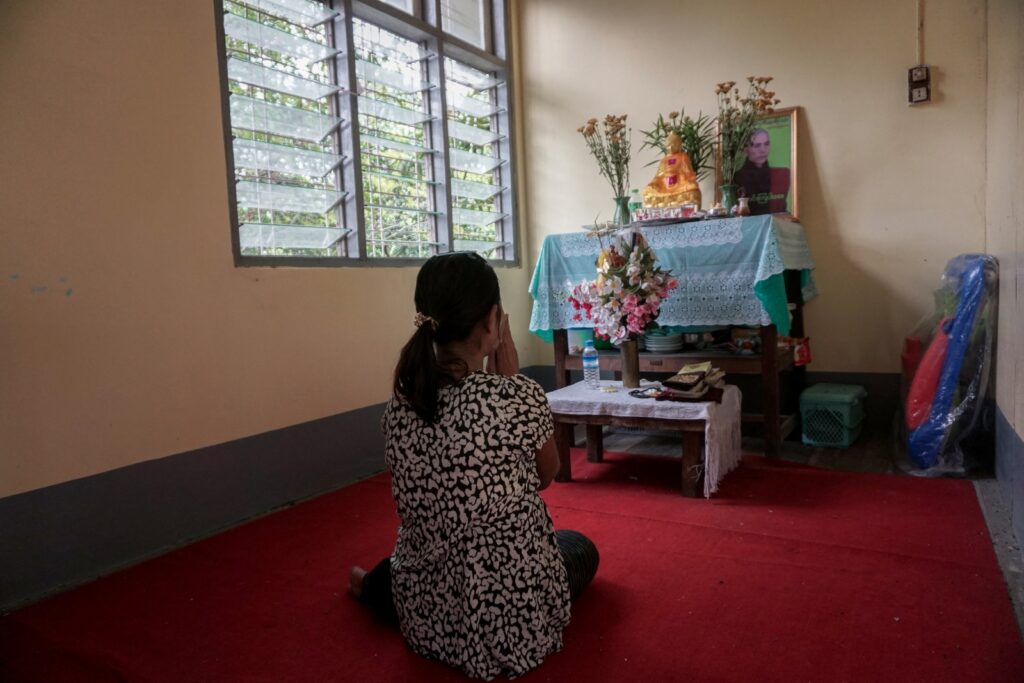
Ni Ni sought counselling at Yangon General Hospital after her abortion in Bangkok, but she was referred to a private clinic.
“After the abortion, I felt hormone changes in my body, and I felt depressed,” she said. “I had many questions: should I use probiotics? Which type of contraception should I use? It was more difficult and frustrating than the abortion.”
Mar Oo pointed out that psychological trauma after an abortion is one of the most serious problems to deal with, but that remains a privilege that few in Myanmar can afford. She is also worried about the women in war-torn areas and IDP camps, where women cannot get contraceptives.
She believes that legalizing abortion is a critical issue for women in Myanmar.
“Our country has many problems, but we cannot just tell people not to have sex,” Mar Oo said.
The fight for reproductive rights
Mar Oo is not alone in demanding the legalisation of abortion in Myanmar. This is a demand common among activists and women’s rights organisations, who point out that the country’s religious institutions and beliefs as major obstacles.
“When I was young, I read a book that said, ‘There’s an attic room in hell for women who get abortions,’” a spokesperson for a newly formed Myanmar women’s rights organisation told Frontier. “We’re taught so much to feel ashamed about abortion, and these ideas need to be debunked.”
The group believes that legalisation would ensure safer abortions, while addressing the growing issues of unregulated abortion pills flooding the online market.
Yet, neither the military regime nor the National Unity Government, a parallel administration set up by lawmakers ousted in the coup, are daring to challenge the taboo against abortion.
When Frontier asked the NUG’s Telehealth, the health ministry’s channel for outreach, they responded that abortion remains illegal in Myanmar and they do not provide any services related to abortion.
Meanwhile, women’s activists continue their work raising awareness among the population, including online workshops and writing articles defending the legalisation of abortion.
“We believe if the voices of the people are loud and united, the government’s stance will change,” said a women’s rights activist.