OPINION
The conflict between the Arakan Army and the regime has littered the westernmost state of Myanmar with landmines and unexploded ordnance, adding to the misery of a civilian population coping with war and economic collapse.
By AUNG MARM OO
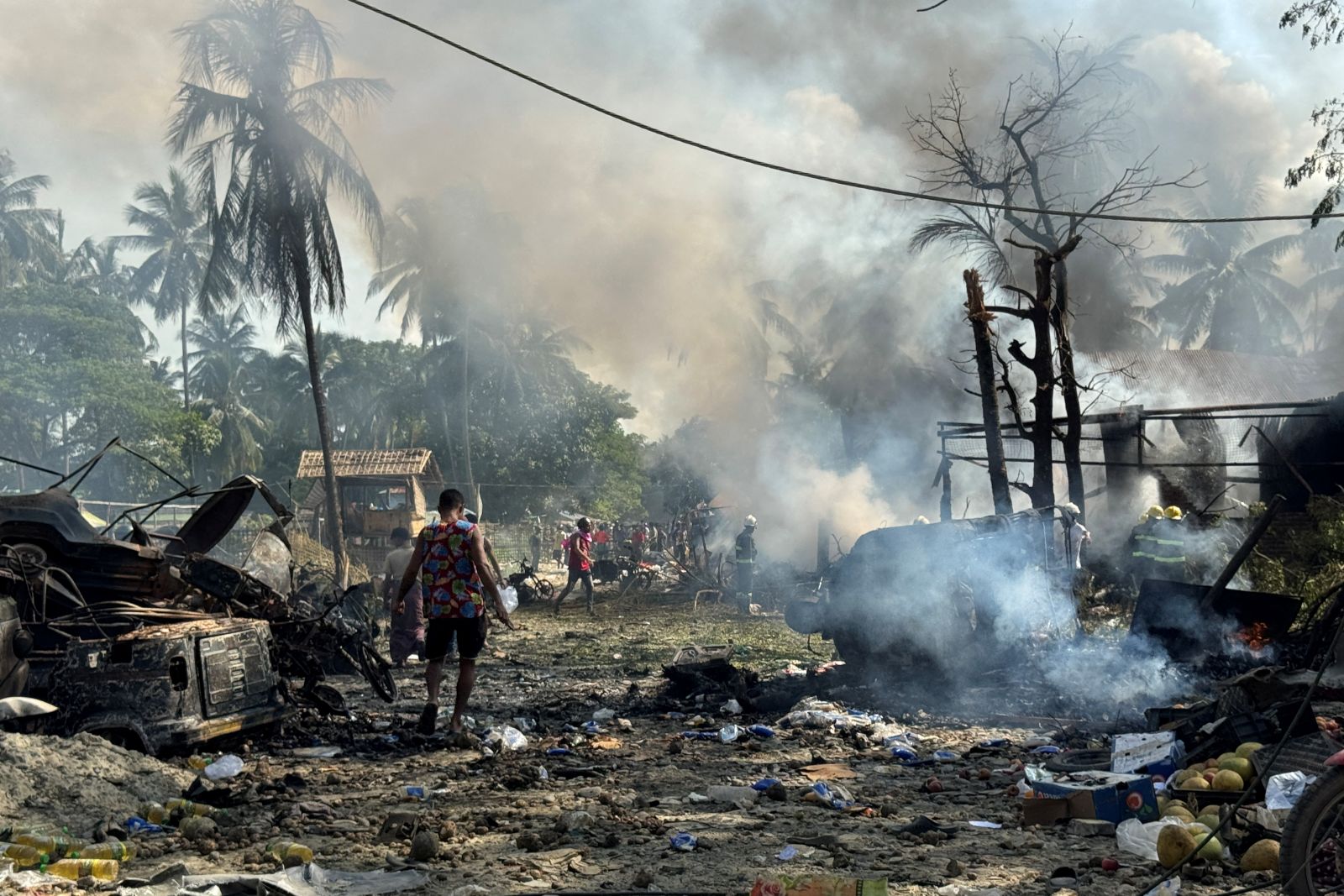
Most media coverage of Myanmar’s civil war focuses on battles, offensives, the fall of towns, airstrikes and the ever-shifting control maps. However, far less attention is given to another dimension of the conflict, which is still present and affects the population even after front lines have moved and soldiers have withdrawn: the landmines and unexploded ordnance left by both the military and resistance groups.
Development Media Group’s latest Landmine Impact Report exposes the grim reality of these remnants of war in three townships in Rakhine State: Kyauktaw, Mrauk-U and Ponnagyun. The main takeaway of our report is that landmines and UXO will shape Rakhine’s future as decisively as politics or armed conflict. The danger these remnants of war pose is virtually everywhere, from farmland, cattle paths, forest routes and riverbanks to the perimeters of people’s homes and even schools.
The danger has woven itself into the daily routines of families trying to survive amid a collapsing economy and a protracted conflict between the regime and the Arakan Army.
The report studies three townships but the conditions that created this crisis are present across the entire state. These conditions include recurring conflict, troop rotations leaving the landmines and UXO behind, widespread displacement and the collapse of local governance.
The most terrifying finding of our research is that nearly half of all injuries caused by landmines and UXO occurred in, or near, the victim’s home, while another 17 percent occurred on the way to work. Children have been killed while playing, parents have stepped on mines while fetching water or collecting bamboo shoots, and farmers have been maimed while they were walking to their fields.
The report’s testimonies reveal not only physical injuries, but also the broader collapse of family life and social wellbeing.
A 15-year-old Mro boy in Kyauktaw died while setting an animal trap, despite warnings that the mountain was mined. Months later, his aunt lost her leg to another mine near where the boy was killed. The boy’s uncle said bitterly: “They cleared only one path. Civilians don’t use only one path.”
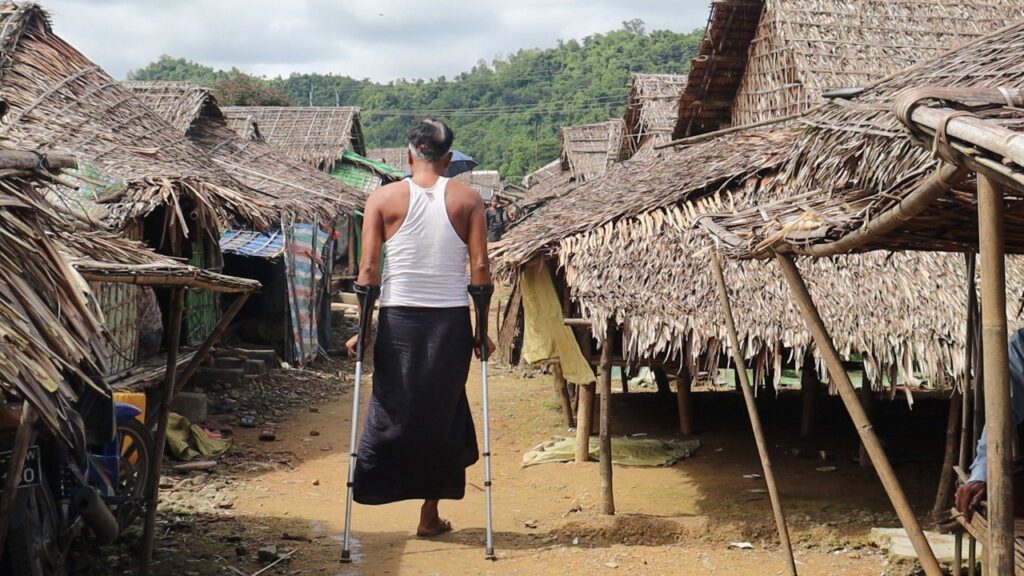
In Ponnagyun, a 63-year-old cattle herder lost his arm and sight when he stepped on a landmine. He now lives in permanent darkness, guided by his grandchildren. “Sometimes I ask myself if I am still a person,” he said.
A man in Mrauk-U said he wakes every night thinking about his wife, killed by a landmine early last year while collecting firewood. “It’s like living in hell,” he said.
These tragedies reflect a larger pattern across Rakhine. Landmines are destroying families, severing income sources, forcing children out of school and triggering cascading trauma across communities.
Since 2018, Rakhine has seen shifting control between the military and the AA, with intermittent ceasefires that often are broken without warning. The conflict has intensified since November 2023, when the AA launched a major offensive across the state. Now the armed group controls all of Rakhine with the exception of the capital Sittwe, Kyaukphyu town and Munaung Township.
Both sides have laid mines during the conflict. Many of them are undocumented and some are forgotten. Others lie in contested areas where no authority accepts responsibility.
The problem has been compounded by the junta’s repressive policies since the 2021 coup. The regime has blocked international NGOs and United Nations agencies from accessing the region, with the International Committee of the Red Cross only able to operate in limited areas. Local civil society organisations face surveillance and arrest for doing their work, while telecommunication blackouts make emergency calls and coordination virtually impossible.
As a result of these blockades, 50pc of villages surveyed by DMG have never received mine risk education, most lack signs clearly indicating contaminated areas and there is no emergency contact information when an incident occurs. Children live among unexploded munitions without knowing how to stay safe, farmers work in dangerous terrain without being able to detect warning signs and families cannot identify even basic explosive hazards.
Meanwhile, the AA is hardly prepared to tackle the problem, as it prioritises military operations and lacks the necessary clearance equipment.
In short, with Rakhine fragmented and institutions hollowed out, humanitarian access is severely constricted and civilians have to navigate the dangers on their own.
The danger of landmines and UXO exists within a broader environment of humanitarian breakdown in which camps for internally displaced people are overcrowded and under-resourced, food prices have skyrocketed, road closures interrupt trade and emergency transport, telecommunications shutdowns have isolated entire communities, and healthcare shortages mean injuries are often untreated.
Landmines and UXO are spreading as social services collapse, making decontamination and recovery virtually impossible.
The problem should not be unsolvable, but urgent action is needed. For starters, humanitarian organisations should have unrestricted humanitarian access. If entry to Rakhine from central Myanmar is blocked by the junta, cross-border humanitarian mechanisms from Bangladesh must be explored.
One of the main tasks is to conduct professional demining operations, with well-trained teams using protective gear and modern equipment, including drones. In the meantime, until decontamination is achieved, mine risk education should be conducted across the state, with training on detection at the village level and contaminated areas clearly demarcated.
Survivors of landmine and UXO incidents need medical and psychosocial support, including prosthetics, surgeries, pain management, trauma care and long-term rehabilitation. This should be accompanied by grants, training and access to markets for survivors and their relatives.
Landmines can remain active for 30 years and even longer. If inaction continues, Rakhine risks becoming a region defined not by its rich history, culture and beautiful landscapes, but by the hidden explosives buried in its soil.
As a widow in Kyauktaw told DMG: “The landmine killed him once, but it keeps killing us every day.” Her grief is both a warning and a call for action.
Aung Marm Oo is the editor-in-chief and executive director of Development Media Group , a news agency based in Rakhine. He faces charges under Myanmar’s Unlawful Associations Act and has been in hiding since May 2019.