Online casino games, easily downloadable onto mobile phones, are growing in popularity in Myanmar, and many people who play them are borrowing huge sums of money in the false hope that they will someday hit the jackpot.
By AUNG MYAT | FRONTIER
Ma Theresa, 22, recalls a time when her family had enough money to buy farmland and other properties in the area where they live in Demoso Township in Karenni (Kayah) State.
But that prosperity began to erode when her sister’s husband became addicted to playing slot games on his mobile phone.
“He was winning money when he first started playing,” Ma Theresa said. “But now he’s tens of thousands of kyats in debt. He keeps playing slot games and we can’t stop him. Now all the farms and land they bought have been put up as collateral for unpaid loans.”
The game he plays is one of the “buffalo” slot games that have become popular in Myanmar. Like other slot games, it’s played by pressing a “spin” button on the phone screen. Players win if buffalo images or other icons line up after the spinning stops.
Ma Theresa’s brother-in-law is far from alone in his addiction. Myanmar is seeing increasingly frequent cases of people who lose everything, fall into debt or, in some cases, die by suicide after being drawn into online games.
In one case, a Myanmar migrant hanged himself from a tree in Thailand’s Chonburi province. His brother said his suicide occurred after he “spent all his money playing slot games on the morning before his death.”
Another game addict who died by suicide is Daw May Thet, a woman in her 40s from Nay Pyi Taw who worked in the gems trade. A relative of the deceased who told Frontier about her case provided a pseudonym for May Thet to protect her identity.
The relative said May Thet never imagined that a simple game she could easily play on her mobile phone would eventually cost her life. She began playing a buffalo slot game in her free time, starting with small wins and losses of K5,000 or K10,000 (between US$1.1 and $2.2 at the market rate).
What began as casual entertainment turned into an obsession within months. When she started losing larger sums of money, she sold her jewellery to continue playing. After losing hundreds of thousands of kyat in family savings, May Thet took her own life in February, according to her relative.
Such games are designed to be easy for anyone with a phone to download and play. They are advertised on social media and promoted through Telegram, Viber and phone messages. Once users install one of the game apps, they can easily access many additional games.
‘Risk of harm’
According to the World Health Organization, electronic gambling machines, which are available both in physical venues and online, “are often associated with the most risk of harm.” These harms include “financial stress, relationship breakdown, family violence, mental illness and suicide.”
In the United States and many other countries, licensed casino games are equipped with random number generators, which ensure that the outcomes of the games are not rigged in favour of either the casino or the player.
“This randomness is what keeps games fair and ensures you have the same chance of winning as anyone else,” according to the next.io online gaming website. Third-party agencies monitor games to verify that RNG systems are in place and work properly.
However, a person with experience in digital security, who shares information about online gambling issues in collaboration with organisations in Myanmar he declined to name, said online games in the country are not legally licensed, are not equipped with RNGs and are not monitored.
As a result, operators can control game outcomes using mathematical models and win-loss ratios that give long-term advantage to the game rather than the player.
He also warned that players do not know who is designing or running the games, and installing such applications can threaten their digital security. If users download a game app and carelessly approve permission requests, operators may gain access to bank accounts, photos, audio files and location data stored on the phone.
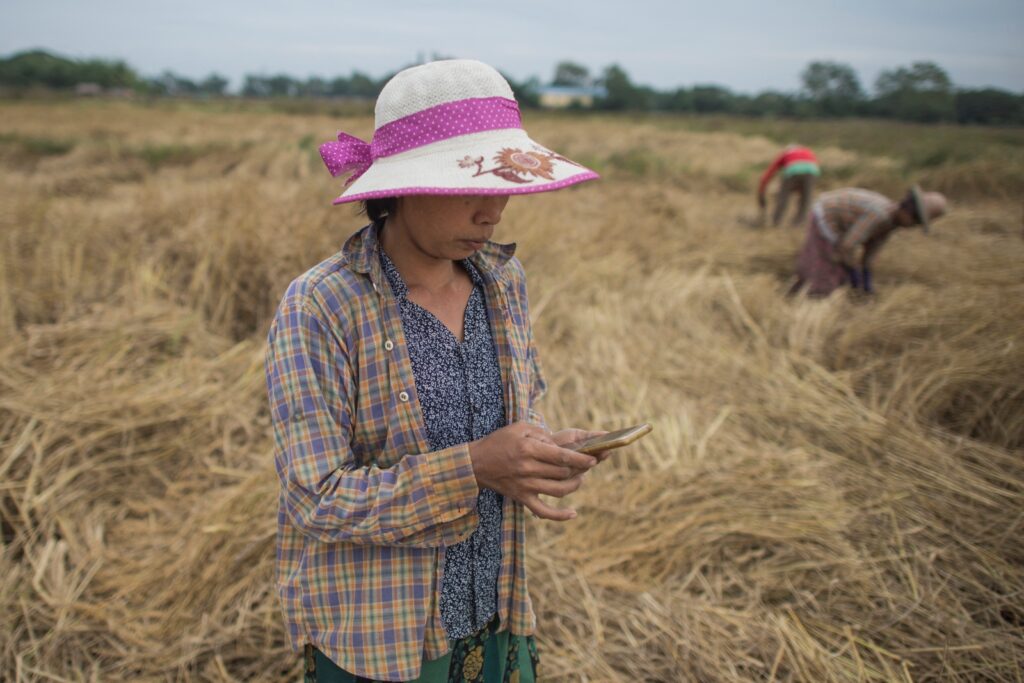
Myanmar Internet Project spokesperson U Thit Nyan said the problem of online slot games in Myanmar has become extremely serious because of the lack of effective laws to protect people and regulate social media.
“Digital security issues are also involved. It has reached the level of digital rights violations. The main thing needed to control this is rule of law,” Thit Nyan said.
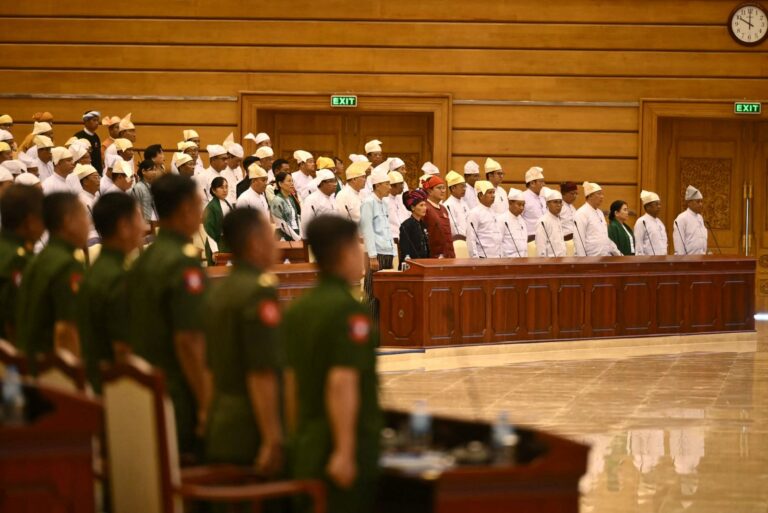
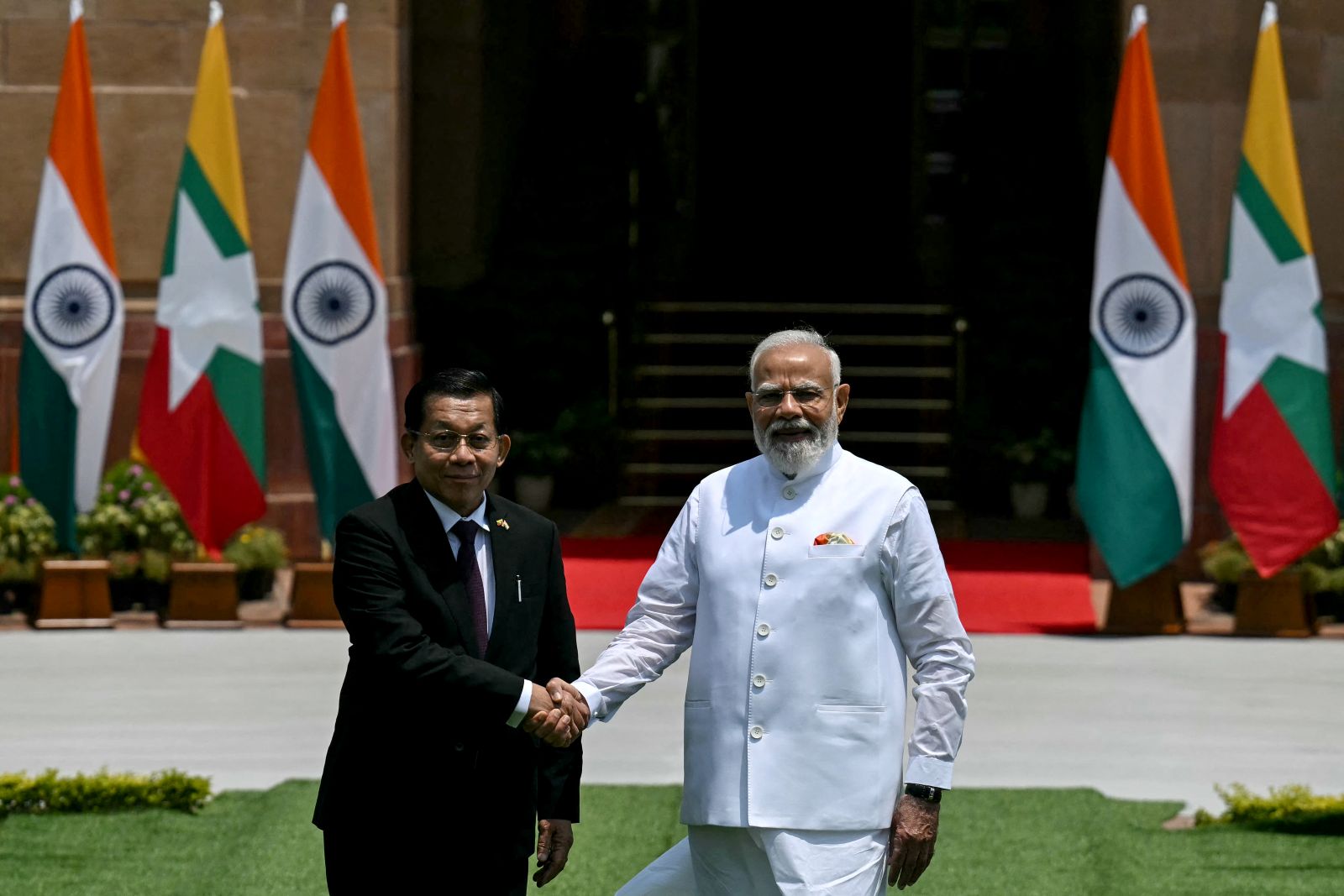
The junta’s deputy home affairs minister Major-General Min Thu said during a parliament session on June 18 that an Anti-Online Scam and Gambling Supervisory Central Committee had been formed to eliminate online scams and online gambling spreading across Myanmar.
According to information from the parliament session, people involved in online games are being prosecuted under Section 33(a) of the 2014 Electronic Transactions Law and Section 71 of the 2025 Cybersecurity Law. From the beginning of 2024 to April this year, nearly 600 people were prosecuted under those laws in more than 240 cases.
Figures given in parliament also show that authorities monitored and took action against mobile wallets used for gambling money transfers, including KPay, Wave Pay and AYAPay. From the start of last year to April, more than 1,000 mobile wallet accounts and more than 100 bank accounts were shut down. More than 200,000 phone numbers belonging to domestic operators that sent online gambling advertisements through SMS were also shut down.
Min Thu said the regime had introduced systems that automatically block numbers that send online gambling SMS messages to at least 60 phone numbers within one hour. Phone numbers are also blocked if the same message is sent to 1,000 different phone numbers within 24 hours.
Despite these claims that authorities are blocking and taking action against advertisements sent to mobile phones, many people say they are still receiving such ads.
Among them is a man from Shan State’s Ywangan Township, who asked not to be named. He told Frontier that although domestic bank accounts used in online games are supposedly being shut down, gambling advertisements on social media have not decreased.
Domestic KPay, Wave Pay and AYAPay accounts are still being included in advertisements, he said.
‘Out of control’
Ko Zarni Thein, the official in charge of the People’s Defence Force in Sagaing Region’s Chaung-U Township, said there is a market for buying personal information that can be used to open domestic bank accounts and buying already opened bank accounts that are then used for gambling transactions.
“People get connected with an agent after playing online slot games and fishing games. At first, they are told they will be paid K100,000 if they can find a KPay account. People in villages are targeted and are paid K50,000 to open those accounts,” Zarni Thein said.
The practice is especially widespread in Myanmar’s central Dry Zone. The main organiser pays K100,000 for each KPay account. The broker gets K40,000, the person who finds the account owner gets K10,000, and the ID card owner who opens the account receives K50,000.
The online gambling operators then use accounts opened under those people’s names to move money in and out of bank accounts, including for online scam operations.
Local authorities in resistance-controlled areas have issued laws banning online gambling.
Ma Theresa from Demoso Township said many resistance fighters in her area have played online games.
“Almost all the young people in our village also played. They were all addicted and played all the time, whether they lost or won,” she said. “It caused serious problems with their families.”
Ko Jack, a man in his 30s working in social assistance in Karenni, said battalion leaders also played the games. Later, cases of theft, robbery and social problems emerged.
“The nature of slot games is that they let people win at the beginning. When one or two people win around K2 million, others around them think they should try playing too. Then many people start playing,” he said.
Ko Jack said one fighter from a Karenni-based resistance force lost around K30 million from playing slot games. To get money to keep playing, he committed small acts of fraud and borrowed money using false claims, such as needing to pay his parents’ medical expenses.
The Karenni Interim Executive Council eventually arrested the fighter for fraud and sentenced him to prison last year.
In September 2024, the KIEC announced that it would take action against businesses operating online gambling games in Karenni.
Under the KIEC’s gambling law, anyone found guilty of online gambling can be sentenced to a minimum of six months and a maximum of one year in prison, as well as a fine.
In addition, anyone found to have loaned money or provided financial support to an online gambler can be sentenced to a minimum of one year and a maximum of three years in prison, as well as a fine.
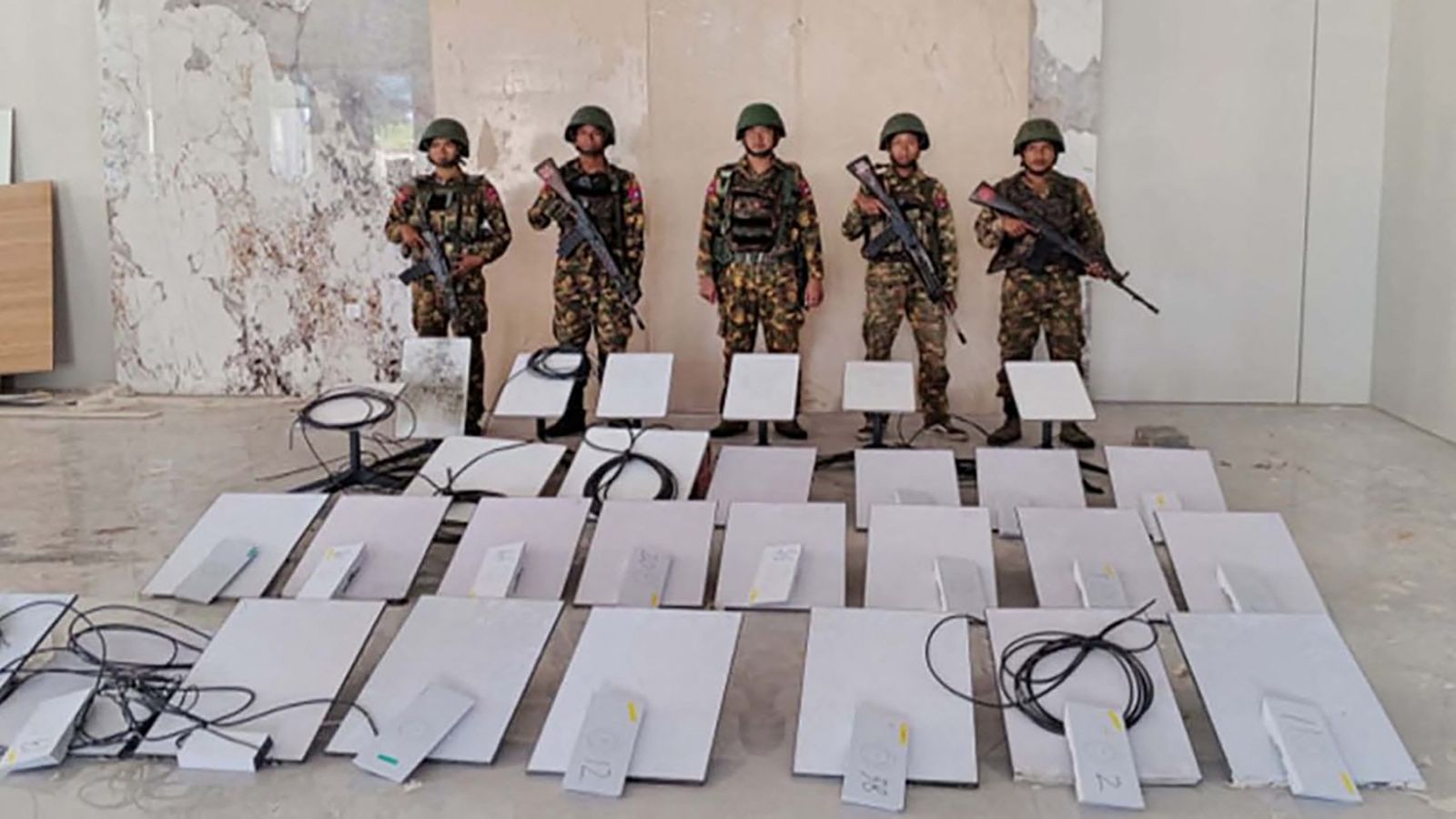
Ko Banyar, second secretary of the KIEC, said some Starlink internet owners who provided services connected to slot games have also been punished.
“Last year, the online slot game problem was out of control. This year, it has been reduced quite a lot,” he said.
However, local residents said that although the situation has eased, online gambling remains widespread, from camps for internally displaced people in ethnic areas to liberated areas controlled by resistance forces in the central Dry Zone.
With strong advertising and attractive incentives on one side, and worsening living conditions, scarce jobs and insufficient income on the other, solving the problem has become a vicious cycle, Zarni Thein said.
“The big news stories in the central Dry Zone are about people dying from artillery strikes and airstrikes,” he said. “People losing money from playing online slot games has become just an ordinary, everyday problem.”