OPINION
The junta chief has become the president of a new – ostensibly civilian – government, but it is unlikely he will initiate any meaningful reform or negotiate with the resistance.
By MYO LWIN OO
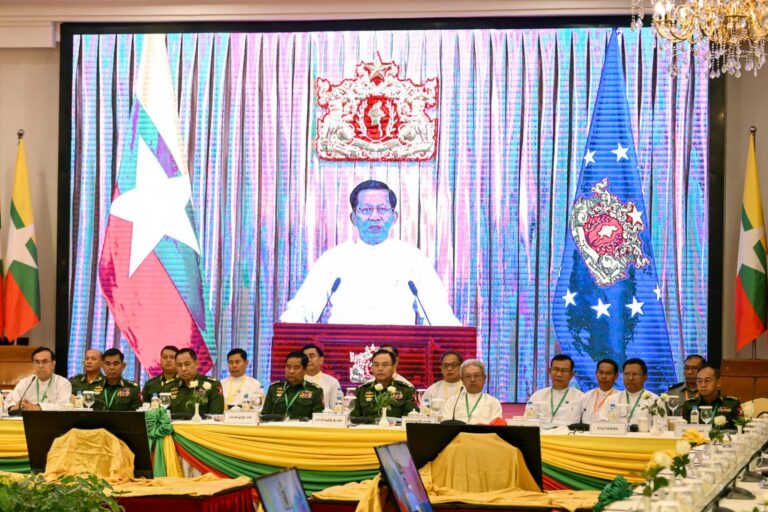
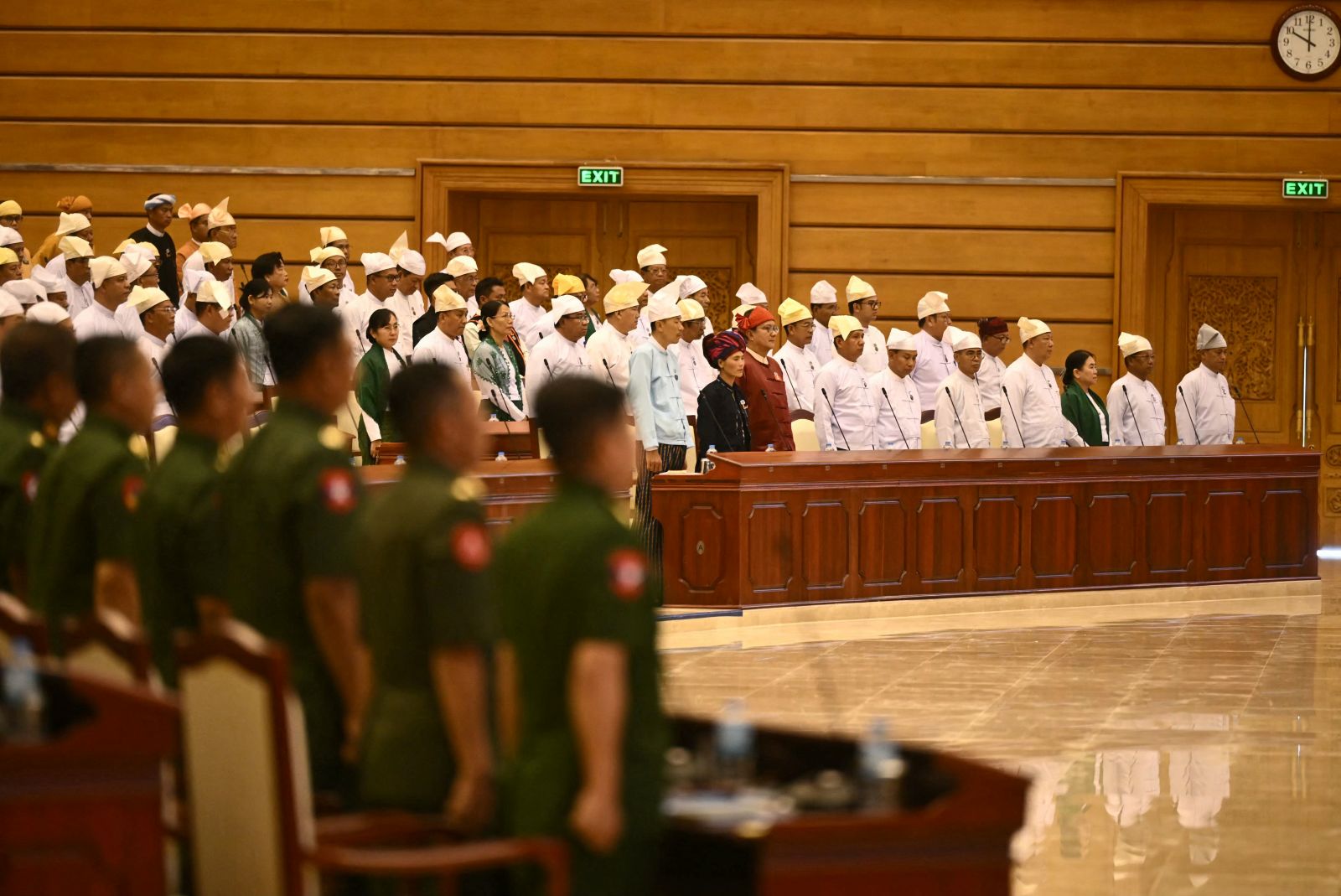
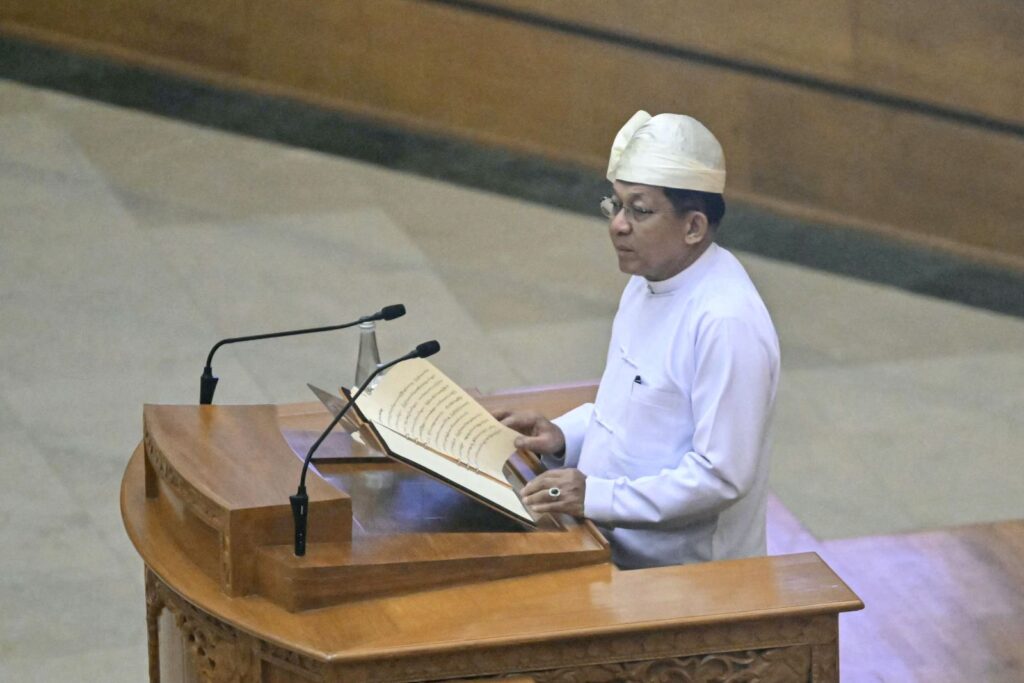
A new “civilian government” dominated by the military has been formed in Myanmar with junta chief U Min Aung Hlaing as its president after a tightly controlled election designed to yield exactly this result.
Opposition politicians and some observers argue that there is no real difference from the regime established after the February 2021 coup – the only change being Min Aung Hlaing swapping his military uniform for the suit of a statesman. Meanwhile, some pro-military lobbyists claim that the new administration will introduce reforms similar to those started by President U Thein Sein in 2011.
The government led by the former General Thein Sein did make real changes. In a bid to attract foreign investment and remove international sanctions, it held genuine talks with pro-democracy leader Daw Aung San Suu Kyi, released political prisoners, allowed more political freedom and removed censorship of the media, among other reforms.
The Thein Sein administration also introduced economic reforms, easing investment, enacting laws to protect international businesses, reforming the banking system and allowing people to hold and transfer foreign currency.
The question is: will Min Aung Hlaing follow the same path?
We must look at the February 2021 coup to answer this. At that time, Min Aung Hlaing had been the commander-in-chief of the armed forces for 10 years and, under the military-drafted 2008 Constitution, he already held as much power as the president, if not more. This included controlling the military budget and its businesses, which constitutes about 25 to 30 percent of the total national budget, without civilian oversight.
Yet Min Aung Hlaing wanted more: he wanted to be president. However, when it became clear he could not accomplish that through democratic means after Aung San Suu Kyi’s National League for Democracy won the poll in a landslide, he took power by force.
The military claimed there was widespread voter fraud in the election, but never proved it. ASEAN and most of the international community were not fooled and saw the February 2021 power grab for what it was: an illegal coup d’etat.
In April 2021, ASEAN leaders met with Min Aung Hlaing in Jakarta and signed a Five-Point Consensus that called for a return to democracy.
Min Aung Hlaing and his junta have never respected the 5PC over the last five years, and the junta chief has prioritised staying in power above everything else. The regime chose violent repression of the opposition instead of the dialogue prescribed by the 5PC, and this led to armed resistance and widespread conflict.
Min Aung Hlaing also returned Myanmar from the market economy launched during the previous decade to a centralised system controlled by the military, bringing the country’s economy to its knees.
In his new presidential guise, Min Aung Hlaing may attempt to make the world accept his government as “legitimate,” but he must implement the 5PC to achieve this. This means releasing Aung San Suu Kyi and other NLD leaders to start a dialogue.
For five years, Min Aung Hlaing has claimed that, according to the 5PC, “dialogue” only means negotiations with some ethnic armed organisations, but the agreement also referred to talks with the NLD leaders he removed from power in the coup. However, it is highly unlikely that Min Aung Hlaing will release Aung San Suu Kyi or hold genuine talks with her party because he sees her as a threat to his hold on power.
Without releasing political prisoners and starting real negotiations with the pro-democracy forces, Min Aung Hlaing will likely continue to face international pressure.
The situation with EAOs is similar. It was Min Aung Hlaing himself who disrupted the implementation of the Nationwide Ceasefire Agreement, a hard-won accord with eight – later 10 – EAOs achieved by the Thein Sein government.
The goal of the NCA was to reach political agreements with EAOs through dialogue before integrating them into the armed forces. However, during his speech on the NCA’s third anniversary on October 15, 2018, Min Aung Hlaing ruined the process by demanding that the EAOs disarm first. This caused the Karen National Union, the strongest signatory of the NCA, to call emergency meetings and prepare for military action.
Since the coup, attendance at NCA meetings has almost disappeared. By 2025, only about six groups had sent low-level representatives to the meetings.
Far from holding talks with the People’s Defence Forces and other new armed groups, Min Aung Hlaing has labelled them as terrorists and continues attacking them. In 2024 he also started enforcing a long-dormant conscription law to press young Myanmar people into the army.
All these precedents indicate that, even though Min Aung Hlaing now calls himself the “elected president,” he will not stop the violence or start genuine negotiations with the resistance.
On the economic front, Min Aung Hlaing’s regime has shifted back to a “command system” to stay in power, fund the military and protect the financial interests of his family. By taking full control of banks and foreign currency, and failing to set correct economic policies, he has caused a massive economic decline.
Moreover, since the coup Myanmar has faced international sanctions and the departure of foreign investors. Foreign direct investment has dropped significantly, border trade has virtually stopped and tourism has almost vanished as a consequence of the civil war, causing a huge loss of income. All these factors have combined to push the economy to its lowest level in decades.
The “civilian government” is unlikely to enact any real reforms, because Min Aung Hlaing’s only objective is to stay in power.
The new president will continue to oppress the opposition and use military force to impose his will and this requires a very large budget. He will likely continue to restrict foreign currency, collect high taxes and tighten imports to prevent people from using foreign currency – all of them obstacles to economic growth.
In a recent interview with BBC Burmese, the Philippine foreign secretary Theresa Lazaro said that ASEAN will maintain its policy of not inviting Min Aung Hlaing to the bloc’s summits. However, countries like Russia, China, Thailand, Belarus, Nicaragua and Kazakhstan have supported the Min Aung Hlaing presidency. The new government will likely continue to face sanctions and pressure from the rest of the international community.
However, Min Aung Hlaing finds himself in a slightly improved position compared to 2021, and that might discourage him from negotiating with the resistance or making concessions.
Myo Lwin Oo is a writer and former political prisoner who has long focused on Myanmar’s political and social issues.